
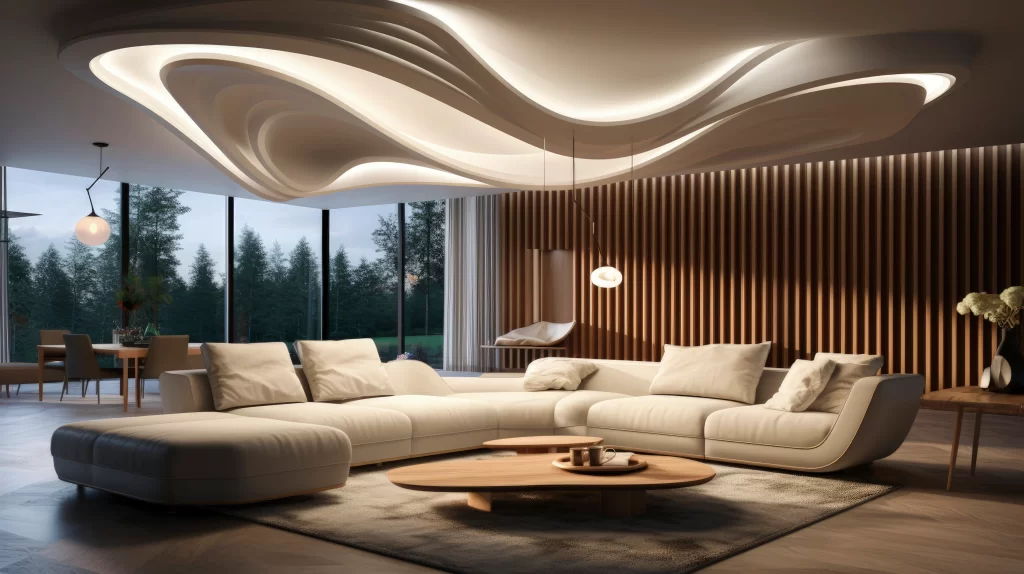
This blog explains the meaning of 3D rendering in interior design and how it transforms ideas into lifelike visual experiences. It covers the full process from modeling and materials to lighting and final renders and highlights why 3D visuals improve clarity, communication, and decision-making. The article also explores real-world uses, types of renderings, tools, and future trends like AR, VR, and AI. Ultimately, it shows how 3D interior renderings help clients and designers bring concepts to life with confidence.
Gone are the days of drawings, mood boards, and fabric samples in interior design. Today, 3D drawings have revolutionized the interior design process, where designers, homeowners, and real estate developers are able to view and finalize interior spaces prior to their being implemented and transform interiors with 3D rendering. 3D renderings in interior design offer a lifelike computer replica wherein all the components, such as textures, furniture, lighting, colors, decorations, shadows, and space sizes appear just as they do in the real world.
If you have been thinking of a renovation, implementing a modern house design, or want to open a commercial space, an interior design rendering can assist you in getting over the gap between imagination and the actual implementation. This article discusses the meaning of 3D rendering in interior design, how it is done, and why it has become a necessity in the contemporary design world , keeping up with evolving 3D rendering trends.
What Is 3D Rendering in Interior Design?
In interior design, 3D rendering refers to the procedure of generating realistic images of interior spaces in a photorealistic manner through the use of special programs. These renderings show how empty spaces appear with real-life lighting, furniture, decor, materials, and space, as in a living room or bedroom or kitchen or office or hotel, or retail space.
In contrast to simple drawings or 2D floor plans, 3D presentations of interior design contain depth, texture, perspective, and visually correct scale. It enables the designers and clients to view the design ideas in real life, giving them a clear picture of the space’s functionality, beauty, and atmosphere.
To put it simply, a 3D interior rendering is a computer rendering of what you are going to build or decorate.
Why 3D Rendering Is Important in Interior Design
Designers used mood boards and drawings to communicate ideas. These conventional ways were, however, not always clear, and thus, the customers could not visualize the end product. This is where design renderings have replaced this, and today interior designers leverage 3D rendering to clearly communicate concepts.
Key Benefits of 3D Renderings in Interior Design:
- 3D renders help clients fully visualize the final outcome of interior spaces.
- It enables designers to test multiple color schemes, furniture layouts, and lighting effects.
- 3D designs reduce design errors and prevent costly changes during construction.
- It helps in faster project approval and better client communication.
- It is a powerful tool for real estate marketing and commercial presentations.
3D rendering not only helps in the enhancement of understanding but also gives emotional confidence, which enables clients to make better decisions.
How 3D Interior Renderings Are Created – The Process
Designing professional interior design renderings consists of several phases. Although the significance of software is significant, the knowledge of design, lighting, and architecture is also considerable.
1. Collecting Project Details
Designers gather floor plans, room measurements, architectural designs, material choices, styles of furniture, and moods.
2. Building the 3D Model
A realistic 3D view of the space is created with software such as SketchUp, Revit, or 3ds Max, comprising doors, walls, windows, and room geometry.
3. Use of Materials and Textures.
Realistic textures used to enrich surfaces include flooring, ceilings, walls, upholstery, curtains, and furnishings, which include wood, leather, marble, metal, fabric, and glass.
4. Lighting and Ambience Setup
Photorealism is achieved with the use of natural sunlight, artificial lights, indoor lamps, shadows, and reflections.
5. Rendering the Image
Based on rendering engines such as V-Ray, Lumion, Corona, or Enscape, the model is rendered into high-resolution images based on the 3D model.
6. Post-Processing
Last-minute refinements are done to fix the lighting, texture sharpness, framing, and presentation standards.
What Makes a High-Quality Interior 3D Rendering?
Professional rendering does not simply involve demonstrating the location of furniture. It has to convey mood, comfort, and functionality, and still be architecturally accurate.
The main components of good interior design renderings are these:
- Realistic materials and surface finishes
- Accurate lighting and shadow behavior
- Human-scale proportion and spatial depth
- Lifestyle-focused décor elements
- Well-balanced furniture layout
- High-resolution details
An interior rendering company makes sure that each rendering is not only what it looks like, but it also conveys the sense and the meaning of the interior design.
Real-World Uses of 3D Renderings in Interior Design
The 3D rendering is currently common in the residential and commercial fields. A number of its practical uses are:
- Interior Rendering for Homeowners
The 3D renderings enable homeowners to plan bedrooms, living rooms, bathrooms, and kitchens, as well as the renovation plans, before committing to materials or furniture.
- For Architects and Interior Designers
Through renderings, designers seek to explore styles, layouts, colors, and textures, then present the final solutions to clients.
In this case, you can propose interlinking your blog on interior architectural rendering to those readers who would like to obtain more information.
- For Real Estate Developers
Before real construction is done, developers market their off-plan property and do virtual tours using interior renders.
- For Furniture and Décor Brands
Brands use 3D renders to show how their furniture looks in real room settings.
Types of Interior 3D Renderings
Not every rendering is similar. Their styles vary in terms of their level of detail and purpose.
1. Conceptual Renderings
These depictions depict simple layouts and positions with more emphasis on functionality than on specific details.
2. Photorealistic Renderings
These renderings are highly detailed and realistic as they are the material, decor, lighting, depth, and mood that are completed in final approvals.
3. Virtual Staging
The images of empty rooms are practically presented using furniture and other features to demonstrate the possibility of design.
4. VR Walkthroughs
The VR technology allows the user to physically walk through the proposed interior space, making the design decisions easier to make.
3D Rendering in Interior Design vs Traditional Design Methods
| Feature | Traditional Methods | 3D Renderings Interior Design |
| Visualization | Based on imagination | Highly realistic |
| Accuracy | Moderate | Very accurate |
| Modification flexibility | Time-consuming | Quick and easy |
| Presentation quality | Basic | Professional and appealing |
| Client engagement | Low | Very high |
3D rendering accelerates approval, strengthens client trust, and ensures design clarity
Tools and Software Used for Interior 3D Rendering
Today’s interior design renderings are powered by advanced software and tools. Some of the popular programs include:
- SketchUp – For basic modeling
- Revit – For architectural modeling
- 3ds Max – For advanced interior modeling
- V-Ray and Corona – For realistic rendering
- Lumion and Enscape – For real-time visualization
- Photoshop – For post-processing adjustments
A combination of these tools is usually applied in a professional interior rendering company to produce high-quality results.
Future of 3D Rendering in Interior Design
The future of 3D in interior design is very innovative and promising. Design visualization is being improved with the help of new technologies, that are Artificial Intelligence, Augmented Reality (AR), and Virtual Reality (VR).
- AI-based texture generation speed up material selection
- AR applications allow users to preview designs in real rooms using smartphones
- VR walk-throughs help users experience the space before construction
- Real-time rendering engines enable instant 3D visualization edits during design meetings
Interior rendering is shifting from static imagery to immersive digital experiences.
Final Thoughts
3D rendering companies provide an opportunity for clients to visualise their dream interiors. It delivers a clear, correct, and realistic representation of the design ideas, enabling designers and clients to make wiser judgments. Everybody, whether a residential renovator or commercial builder, enjoys a realistic visualization of designs. Partner with Arket 3D to bring various interior designs to life and enhance your customer experiences.
Read More:- Why Interior Designers Use 3D Rendering for Marketing