
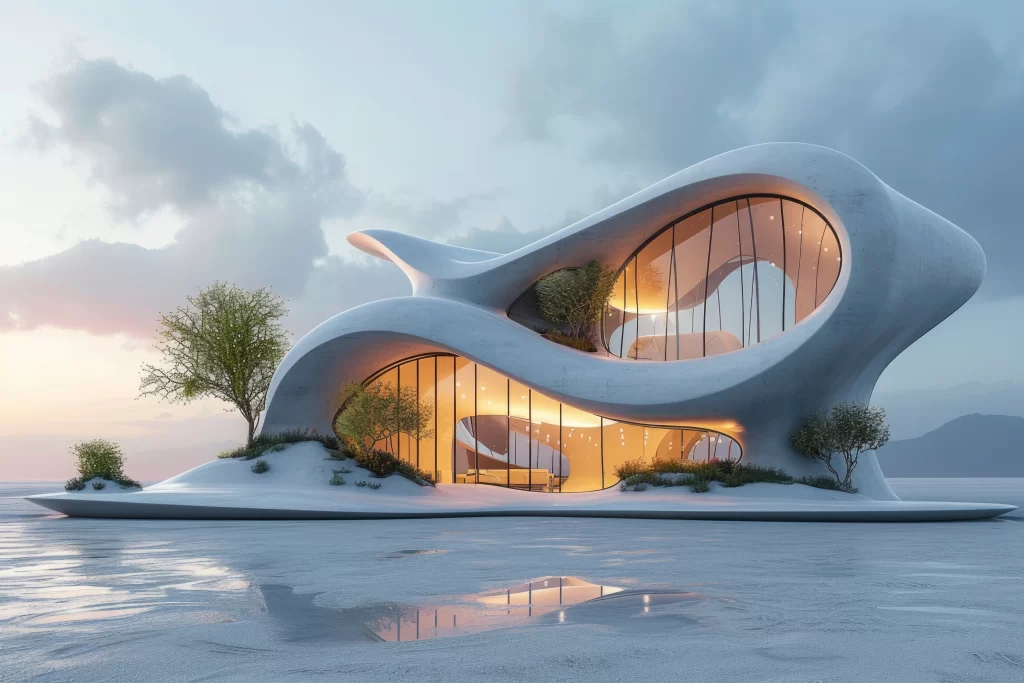
3D exterior rendering transforms architectural plans into realistic visuals that showcase a building’s exterior, materials, lighting, and surroundings. It helps architects, developers, and clients better understand designs, make faster decisions, and avoid costly errors before construction begins. This guide explains the meaning, applications, and benefits of exterior visualization across residential, commercial, and real estate projects.
An architectural design is more focused on articulate and attractive images to convey concepts with accuracy. One of the most effective techniques is 3D exterior rendering, which converts architectural plans into realistic photos that capture a building’s exterior details, while addressing Exterior 3D Rendering Costs.
This method enables architects, developers, and clients to know materials, lighting, scale, and surroundings before a building is constructed. Through a realistic preview, exterior visualization helps to eliminate uncertainties, aids design decisions, and fortifies project presentations by helping Improve 3D Exterior Rendering Techniques.
Regardless of the scale of residential, commercial, or large-scale development, 3D exterior rendering is considered a necessary tool for clearly and confidently conveying architectural concepts. This article describes such a concept, how it works, its biggest applications, and the key benefits it has on the architectural project.
What Is 3D Exterior Rendering?
A 3D exterior rendering process produces realistic or stylized photographs that capture the exterior appearance of a construction or building. The designers utilize specialized software to create a detailed 3D version, and then apply lighting, material, textures, and environmental effects to create a realistic visual image, following Tips & Software for 3D Exterior Rendering.
Why Exterior Visualization Matters
Before the era of digital rendering, architects relied on sketches, hand drawings, or physical models to convey exterior design concepts. While valuable, these methods were limited in realism and flexibility. Exterior visualization has changed the industry by providing a dynamic and interactive way to explore and refine designs.
Uses of 3D Exterior Rendering in Architectural Projects
There are many areas where 3D exterior rendering is applied. The most popular applications are listed below:
Residential Architecture
The exterior 3D rendering also enables the homeowner and the architect to visualize the home’s design, materials, roof, and landscaping. It aids clients in decision-making, aligning expectations, and reducing costly changes of direction during construction , especially in Residential 3D Exterior Rendering.
Business and Manufacturing Projects
External visualization depicts the size, architecture, and context of commercial and industrial buildings and assists the interested parties to assess offices, shopping malls, hotels, or factories, and facilitates approvals, investor participation, and construction planning.
Real-Estate Marketing
Renderings boost real-estate marketing by showcasing properties before construction. Good design will enhance client interest and the presentation of the design, and can also decrease pre-construction sales through realistic, appealing images.
Urban Planning and Infrastructure
Those involved in planning apply 3D exterior modeling to provide an appearance of streetscapes, open spaces, and infrastructure, evaluate environmental impact, and provide functional and appealing integration of new buildings into existing urban settings.
Renovation and Remodeling
Exterior renderings give previews of renovations or extensions, allowing clients and designers to experiment with changes and ensure they fit the existing structures, reduce errors, and enhance the project’s overall decision-making and efficiency.
Key Benefits of Exterior Rendering
The benefits of rendering technology are numerous and make the design, approval, and marketing stages of a project more effective. The notable benefits of exterior rendering include the following.
Improved Design Accuracy
The visuals created using 3D exterior rendering are accurate and detailed, and all the materials, angles, and shadows are captured correctly. This minimises architectural mistakes and enables one to modify the architectural components readily.
Improved Customer service communication
It is possible that clients have difficulty comprehending 2D drawings, and they readily comprehend 3D. Exterior rendering removes confusion by making the design easier to perceive.
Faster Decision-Making
Clients make faster judgments about materials, color, and structure when they have a clear picture of the outcome. The clarity of the visual reduces the revision time and the project approval time.
Cost and Time Savings
The modifications that occur in the construction process are costly. The renderings enable the clients and architects to detect problems at an early stage, avoiding expensive errors in the future.
Marketing and Sales Benefits
Realistic exterior paintings are effective advertising strategies through different Variants of 3D Exterior Rendering. They help:
- Attract investors
- Impress stakeholders
- Promote off-plan properties
- Boost client confidence
Professional graphics can easily improve the perception of a project.
The Role of Technology in Modern 3D Exterior Rendering
It has also been possible through developments in the rendering software (3ds Max, Blender, Revit, Lumion, Unreal Engine) to create hyper-realistic images. The use of AI-based tools and real-time rendering technologies enables real-time updates, an interactive walkthrough, and VR experiences.
Such technologies assist architectural companies in producing their designs in a faster and better visual quality, which eventually improves the outcome of the projects.
How 3D Exterior Rendering Elevates Architectural Projects
The effects of good architectural exterior renderings are felt throughout the project life-cycle:
During Concept Design
Exterior representation in 3D enables the architects to experiment with various architectural designs, materials, and forms and see them in real life. There is an opportunity to present the ideas to clients more effectively and receive their feedback, and make effective decisions at the initial stages of the work.
During Development
Drawing assists in determining the possible design problems, evaluating proportions, and visualizing landscaping and lighting. This will ensure that structural aspects and aesthetics are perfected before construction, eliminating mistakes and enhancing the project’s efficiency.
During Presentation
Architects use exterior visualization to create impressive presentations for clients, stakeholders, and approval boards. Realistic images convey clear design intent, enhance understanding and engagement, and increase the likelihood of overall project approval.
During Marketing
The 3D renderings improve marketing by presenting the buildings before construction. Good visuals will appeal to investors, facilitate off-plan sales, and generate enthusiasm, thereby enhancing client confidence and interest in the project.
Conclusion
3D exterior rendering has now become a critical solution to architecture projects in the format of realistic and detailed architectural exterior rendering images that can greatly increase the accuracy of designs, communications, and client involvement. Through exterior visualization, architects, developers, and stakeholders can experiment, identify issues, and visualize end results, simplifying decision-making and minimizing the need to spend significant amounts of money on erroneous decisions.
Read More:- Common Mistakes with 3D Exterior Rendering By Architects
FAQs
1. What is 3D Product Rendering?
Rendering 3D products is a technique of designing realistic 3D-based digital pictures of a product through 3D modelling and CGI. It recreates real materials, lighting, and textures and therefore gives companies the opportunity to market, sell, prototype, and advertise their products at any angle without having to use actual samples.
2. How to Make a 3D Walkthrough?
In order to develop a 3D walkthrough, the designers develop a detailed 3D model, apply realistic materials, create natural and artificial lighting, and animate fluid camera movement around the scene. The sequence is then made to be rendered and later improved in post-production to create a virtual tour of the space.
3. How Long Does 3D Exterior Rendering Take?
Time used is dependent on the complexity of a project, the level of detail, and the number of views ordered. Simple domestic fronts can be done in one or two days, and big commercial or very detailed backgrounds can take days. Lighting arrangements, photorealism finishes, and revisions may increase the time.
4. How to 3D Render a Product?
It takes 3D rendering to render a product, model in detail, use realistic material, set correct lighting, and position a camera. Create photorealistic images with such rendering software as V-Ray, Blender, or KeyShot. Post-production is done to finalize with color correction, shadows, and reflections to achieve professional results.
5. How to Get Clients as an Architect?
To engage clients, architects may demonstrate good portfolios, be active online, communicate with developers, resort to social media, and cooperate with contractors. Trust is also developed by offering good-quality renderings, walkthroughs, and case studies. Good reviews, referrals, and attending local events are very powerful boosters of visibility and credibility.
6. How to Use Artificial Intelligence to Enhance Architectural Renderings?
AI can scale images, enhance textures, adjust lighting, generate alternative design options, and automate time-intensive rendering processes. Lumion AI, D5 Render, and Photoshop AI improve realism, weather conditions, plants, and materials. Artificial intelligence is used to hasten the construction process, enhance precision, and assist designers in presenting more refined images.
7. What is the significance of 3D exterior rendering to real estate marketing?
The 3D exterior rendering assists the developers and agents in making unbuilt properties look appealing. It develops life-like visuals on brochures, websites, and advertisements, resulting in interest, development of trust, and pre-construction sales as buyers have a clear visualization of the project before construction is done.