
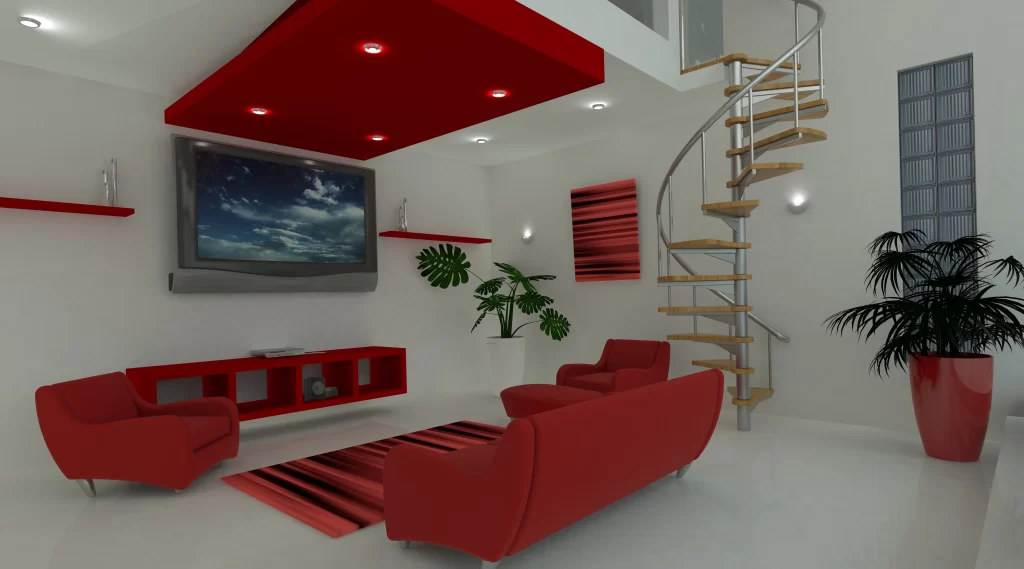
Rendering in interior design is a digital visualization process that transforms concepts into realistic images of a finished space. It helps designers and clients clearly understand layouts, materials, lighting, and furniture before execution. This guide explains the meaning of interior renderings, the step-by-step process, different types, and real-world examples that show their practical value.
The development of interior design has gone way beyond sketching and mood boards, due to the emergence of sophisticated digital visualisation. The rendering in interior design today is important for transforming concepts into realistic images that clients can easily understand. Simulation is done on materials, lighting, colours, and furniture using renderings to provide a realistic preview of a completed space highlighting the Benefits of Using 3D Interior Design. To start with, planning outlays and narrowing down to the details improve communication, accelerate decision-making, and enhance the overall design experience.
What Is Rendering in Interior Design?
An interior design rendering is a computer-generated image that depicts an estate’s appearance once completed. It may be a basic 2D drawing or an elaborate photorealistic 3D representation, depending on the tools and software used. The images can convey colour scheme, materials, lighting, spatial movement, and furniture positioning in ways that are not achievable with words or even drawings , which is why Interior Designers Can Leverage 3D Rendering effectively.
Why Interior Design Renderings Matter
The importance of renderings has increased with the attendant expectations of clients and technological abilities. Using sophisticated software, designers can display numerous design options cost-effectively demonstrating the Benefits of Using 3D Interior Design. The following are some of the reasons why renderings are so essential:
Improved Client Communications
Clients are not always able to comprehend blueprints or conceptual boards. Renderings do not create any ambiguity, as they show the actual outcome they would produce through 3D Visualization Services for Smarter Interior Design.
Faster Decision-Making
Visuals enable customers to review different alternatives, including paint colors and finishes, lighting, and layout, before agreeing. This speeds up the approval process and keeps it working in the same direction.
Reduced Risk and Cost
A proper interior design rendering process minimizes expensive errors. Clients can visualize the design and thus have less possibility of last-minute changes and dissatisfaction after the build-out.
Understanding the Interior Design Rendering Process
The interior design rendering process consists of several steps, including starting with rough sketches and ending with photorealistic images using Rendering in Interior Design. Although methods vary a little among individual designers or studios, the basic processes are the same.
Concept Development
The designer collects data on the client, their objectives, and functional requirements before developing a rendering. This phase can also involve mood boards, material samples, and concept drawings.
2D Drafting
Designers usually develop a 2D floor plan and represent the dimensions, circulation pattern, and spatial arrangement. This is the guideline for the rendering.
3D Modeling
Before the process of rendering, the designer creates a virtual model of the space using specific software. The walls, windows, doors, flooring, and other architectural elements are designed in digital format to reflect the actual space.
Lighting Setup
One of the most important aspects in a rendering is lighting. Designers emulate natural and artificial light sources to create real shadows, accents, and the overall atmosphere.
Rendering
At this stage, the virtual model is converted into a high-quality image. The model is rendered into realistic graphics using software. This process is a sub-process of rendering and includes the computational methods of modeling the behavior of light, color rendering and material interaction.
Different Types of Interior Design Renderings
The renderings vary depending on the project requirements. The most typical ones are the following:
Sketch Renderings
These sketched images (hand-drawn or digitally sketched) give a rough idea of the concept. They would be suitable for initial design consultations.
2D Renderings
When a plan is in progress, these renderings are handy and provide a top-down view of furniture placement and room measurements.
Interior 3D Renderings
They are the most realistic and universal. They offer an all-encompassing three-dimensional view of an area, including details on textures, lighting, and furniture.
Virtual Realities (VR) Renderings
VR enables the clients to walk in their future. This is a modern, state-of-the-art technology that is gaining popularity in business and luxury residential design.
Real-World Examples of Interior Design Renderings
Example 1: Residential Living Room Makeover
A designer who was doing an upgrade on the living room utilized interior 3D renderings to demonstrate the effect of various sofa layouts and wall color on the living room. The client might see the modern and the farmhouse alternatives and this would help them make their decisions easier.
Example 2: Restaurant Design Concept
One of the new restaurants used Arktek 3D rendering services to show investors the mood, layout and light plan. The illustrations were used to raise its funds because this would demonstrate how the space would be during the times of meals.
Advantages of interior rendering
Interior design rendering provides at least a few advantages to the designers, as well as clients:
- Visualization: Rendering enables the designer to express their ideas realistically and attractively. The potential clients are able to appreciate the design proposed such as layout, color schemes, placement of furniture and lighting.
- Authenticity: Renderings provide a very precise view of how the final design will be, allowing clients to see how various elements will be assembled in the space. This minimizes confusion and repetition later in the process.
- Cost-Effective: It is much more cost-effective to make changes to a design at the rendering stage than at the construction or implementation stage. It helps prevent costly errors and rework.
- Time-Saving: using rendering software, a designer can create a photorealistic image quite fast, in comparison to the old methods of making such images, such as hand drawing or models. This is time-saving and enables shorter design iterations.
Conclusion
The design industry has been revolutionised because renderings present ideas and can be seen and felt before the construction process. They improve communication, lessen risk and improve the creative process.
As a client, a designer, or any other person working in the industry, you can use knowledge of how renderings work and why they are important to deliver more successful results and make more decisive choices. The interior 3D renderings not only make creativity alive but also make sure that all the design decisions made are practical, cohesive, and in accordance with the vision of the client.
FAQs
What are the benefits of 3D modelling?
3D modelling assists the designer in visualising areas correctly, experimenting rapidly and minimising mistakes. It demonstrates natural proportions, lighting, and materials to make communication with clients better. Various design alternatives may be considered before construction, as they are effective in time and money. In totality, it boosts creativity, planning and decision making in architecture, interior design, product development and animation.
What is photorealistic rendering?
Photorealistic rendering is a digital process used to produce very realistic images through the imitation of natural lighting, materials, shadows and textures. It allows viewers to see how a space or object will look in reality before construction. It is applied by designers to introduce persuasive, understandable images that enhance the decision-making process and minimise the risk of misinterpretation in interior design, architecture, and product visualisation.
What does a rendering in interior design mean?
The inside design rendering is an image which is digital and depicts what a space would appear like before it is constructed or refurbished. It captures lighting, furnishing, materials and colors in order to make the clients comprehend the design. Renderers enhance communication, minimise errors and enable adjustments early. They may be crudely drawn sketches or elaborately drawn 3D images that are more or less like the actual space.
What is the major to pursue to be a 3D modeller?
The most commonly used majors to be a 3D modeller would be majors such as 3D Animation, Game Design, Digital Media, Graphic Design, Architecture or Industrial Design. These programs impart modeling, rendering, texturing and animation. Many practitioners also build a strong portfolio either on their own or through web-based courses as they prepare to work in gaming, film, architecture, or product design.
Are there popular architecture apps for the iPhone?
Yes, Morpholio Trace, Magicplan, AutoCAD mobile and SketchUp Viewer are iPhone-popular apps. They assist in drawing, writing, floor plans and watching 3D models. Other assistive solutions include RoomScan Pro for measurements and Houzz for design inspiration. The tools enable architects and designers to be efficient in their projects directly through their mobile devices.
What is the AI that is most successful at interior design?
The best AI products in interior design are Midjourney, DALL, Homestyler, Planner 5D, and RoomGPT. It is through these platforms that design concepts are generated, realistic room previews are created and various styles are tested promptly. 3D experts like Arktek also use Decorilla or Havenly and AI alongside professional designers. The optimal option will be determined by the necessity to plan the layout, generate visual impressions, or redesign entire rooms.
Read More:- Why Interior Designers Use 3D Rendering for Marketing