
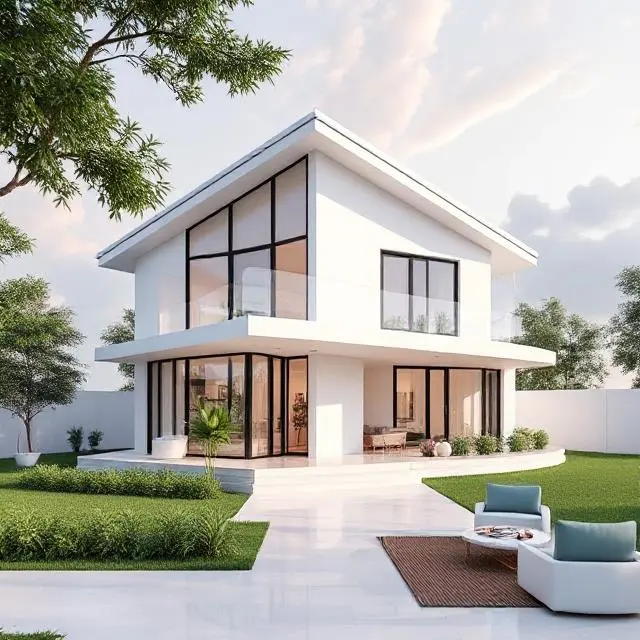
3D house rendering transforms how architects and homeowners plan and present projects. It offers realistic home design visualization, accurate architectural rendering, and immersive residential 3D visualization. From exterior 3D rendering and landscape architecture rendering to understanding costs and future trends like VR/AR, it reduces risks, enhances collaboration, and improves marketing. For architects, builders, and homeowners alike, it’s a powerful tool that ensures smarter, faster, and more satisfying home design.
In the modern world of design and construction, technology has reshaped how projects are planned, visualized, and delivered. Among the most impactful innovations is 3D house rendering, a tool that allows architects, designers, and homeowners to see lifelike visuals of a property before construction begins.
Gone are the days of relying solely on blueprints or flat 2D sketches. With rendering, even the smallest details from textures and materials to lighting and landscaping can be previewed, ensuring that everyone involved shares the same vision.
Whether you are an architect presenting to clients or a homeowner planning your dream house, 3D house rendering provides immense benefits. Let’s explore them in detail.
1. Enhanced Home Design Visualization
One of the key strengths of 3D house rendering is its ability to provide clear and realistic home design visualization. Many homeowners struggle to interpret technical floor plans, which often leads to misunderstandings and revisions.
With 3D visualization, clients can:
- See how spaces connect with each other.
- Visualize furniture, décor, and lighting layouts.
- Preview materials like tiles, wood, or paint in different settings.
This ability to “walk through” a design virtually builds confidence, reduces guesswork, and helps clients make informed decisions.
2. Improved Accuracy with Architectural Rendering
Architectural rendering is a game changer in ensuring accuracy. Traditional drawings might leave out small yet important details, but rendering captures them all.
For example, a realistic house render can highlight:
- Natural light direction at different times of day.
- The effect of structural elements like beams or large windows.
- Compatibility of chosen materials with the overall theme.
By offering clarity upfront, architectural rendering reduces the risk of costly modifications during construction.
3. Realistic House Render for Smarter Decisions
A realistic house render bridges the gap between imagination and reality. Instead of trying to mentally picture a house, clients can see a virtual yet lifelike version.
Benefits include:
- Virtual walkthroughs to explore interiors.
- Assessing proportions of rooms and furniture placement.
- Evaluating how outdoor and indoor areas connect.
This approach makes decision-making faster and prevents post-construction disappointment.
4. Exterior 3D Rendering for Strong First Impressions
The exterior of a home sets the tone for its overall appeal. That’s why exterior 3D rendering is so powerful. It allows clients to view the house from multiple angles and compare design variations.
Key benefits:
- Test different façade materials like glass, stone, or brick.
- See landscaping options with lighting and greenery.
- Evaluate roof types, garage placements, and outdoor structures.
For real estate developers, exterior 3D rendering becomes an essential sales tool, helping them showcase future projects to buyers long before construction begins.
5. Residential 3D Visualization for Personalization
Every homeowner wants a space that reflects their lifestyle. Residential 3D visualization helps tailor designs to individual preferences.
Through this process, clients can preview:
- Kitchen layouts and cabinetry finishes.
- Bathroom designs, fixtures, and tiles.
- Outdoor areas like terraces, balconies, and pools.
This degree of personalization ensures that homes are built to truly match expectations rather than assumptions.
6. Supporting Landscape Architecture Rendering
The exterior environment of a home plays a huge role in overall design. Landscape architecture rendering integrates outdoor features into the plan, making it easier to visualize the complete property.
This includes:
- Gardens, trees, and pathways.
- Pools, patios, and backyard features.
- Lighting setups that enhance ambiance at night.
By incorporating landscape architecture rendering, homeowners gain a holistic perspective that extends beyond walls and roofs.
7. Understanding Exterior 3D Rendering Costs
Many clients worry about budgets, which makes discussing Exterior 3D Rendering Costs important. While costs vary depending on project complexity, the long-term savings often outweigh the initial investment.
Why? Because rendering helps:
- Spot design flaws before construction begins.
- Eliminate expensive redesigns or demolitions.
- Reduce delays caused by unclear communication.
For architects, being transparent about Exterior 3D Rendering Costs strengthens client trust and positions rendering as a valuable tool rather than an extra expense.
8. Why 3D Architectural Visualisation is Such an Important Thing Today
Why 3D Architectural Visualisation is Such an Important Thing Today comes down to its role in modern communication and efficiency.
- It ensures clarity between architects, builders, and homeowners.
- It speeds up approvals by showing realistic visuals.
- It allows investors and buyers to commit with confidence.
- It provides marketing materials for real estate sales.
In a competitive industry, embracing visualization isn’t optional it’s necessary to stay relevant.
9. Visualization Services for Collaboration and Marketing
Professional visualization services extend far beyond just images. They create a shared platform for collaboration.
With these services:
- Architects can pitch bold ideas convincingly.
- Homeowners can refine details before construction.
- Builders and contractors follow more precise guidelines.
Moreover, visualization services double as powerful marketing tools ideal for portfolios, presentations, websites, and advertising campaigns.
10. Future of Architectural Rendering and 3D Visualization
The future of architectural rendering is becoming more interactive. Emerging technologies like VR (Virtual Reality) and AR (Augmented Reality) are taking residential 3D visualization to new levels.
Imagine being able to:
- Put on VR goggles and walk through your house before it’s built.
- Change wall colors or materials in real-time with AR apps.
- See seasonal changes in landscaping digitally.
These advancements make 3D house rendering even more indispensable, ensuring architecture remains future-ready.
11. Real-World Applications of 3D House Rendering
To understand the true impact, let’s look at practical applications:
- For homeowners: Helps visualize dream homes before committing to construction.
- For architects: Enhances presentations and reduces client objections.
- For real estate developers: Acts as a sales tool to attract buyers early.
- For contractors: Provides clarity to avoid misinterpretations on-site.
This versatility makes 3D house rendering one of the most widely used tools in modern construction.
Conclusion
The benefits of 3D house rendering for architects and homeowners are far-reaching. From detailed home design visualization and accurate architectural rendering to immersive residential 3D visualization, the advantages are clear.
By incorporating landscape architecture rendering, understanding Exterior 3D Rendering Costs, and recognizing Why 3D Architectural Visualisation is Such an Important Thing Today, professionals and homeowners can reduce risks, save money, and achieve outstanding results.
In short, 3D house rendering is not just a tool it’s the foundation of smarter, faster, and more satisfying home design.
FAQs
Q1. What is 3D house rendering?
It’s the process of creating realistic 3D visuals of a home, allowing clients to preview designs before construction.
Q2. How does 3D house rendering help homeowners?
It helps them make better design choices, visualize layouts, and avoid costly mistakes.
Q3. What is included in residential 3D visualization?
It includes interiors, exteriors, décor, and even landscaping for a complete view of the property.
Q4. Are Exterior 3D Rendering Costs high?
They vary depending on complexity, but they usually save money in the long run by preventing design errors.
Q5. Why is 3D architectural visualisation so important today?
Because it improves communication, speeds up decision-making, and enhances marketing efforts in real estate.