
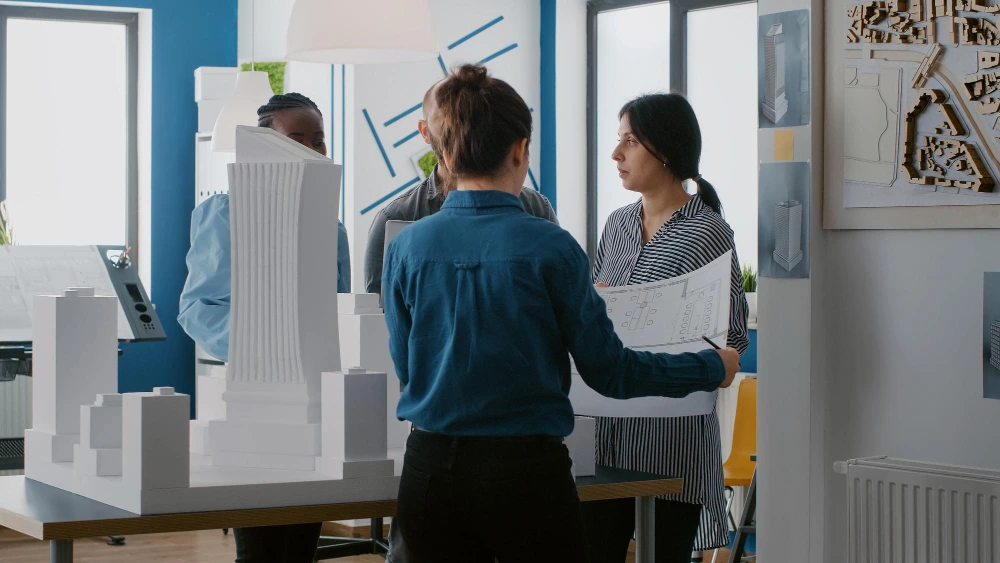
In the high-stakes world of modern design, Project Visualisation has evolved from a luxury to a fundamental necessity for architectural success. By utilizing professional architectural 3d rendering services, firms can bridge the communication gap between blueprints and reality, ensuring stakeholders are aligned and costly construction errors are eliminated. This blog explores how the Power of Storytelling in 3D Visualization transforms technical data into emotional connections, driving business growth and defining the future of the built environment.
In the ever-evolving landscape of the construction and design industry, the phrase “seeing is believing” has never been more relevant. As buildings become more complex and client expectations soar, the reliance on traditional 2D blueprints has faded, making way for a new era of digital clarity. Project Visualisation for Modern Architecture is no longer a luxury reserved for high-budget landmarks; it is a fundamental pillar of successful project delivery.
From streamlining communication to securing multi-million dollar investments, the integration of architectural 3d rendering services has fundamentally changed how we conceive, build, and market our physical world. This blog explores why accurate project visualisation is the heartbeat of modern architecture and how it provides a competitive edge in today’s market.
The Evolution: From Blueprints to Immersive Experiences
For decades, architects communicated their visions through hand-drawn sketches and technical blueprints. While functional, these methods required a high level of technical literacy to interpret. A client looking at a floor plan might struggle to understand the “feel” of a space the way sunlight hits a breakfast nook or how a narrow hallway might affect the flow of a home.
Modern Architectural Visualization bridges this gap. By utilizing a 3D Architectural Visualization service, architects can transform abstract numbers and lines into photorealistic environments. This transition represents a shift from “showing” a design to “experiencing” it. It allows stakeholders to step inside a building years before the first brick is laid.
Why Accurate Project Visualisation is Essential
1. Bridging the Communication Gap
The most significant hurdle in any architectural project is the “interpretation gap.” An architect, a structural engineer, and a client may look at the same set of drawings and see three different things. Project Visualisation provides a “single source of truth.” When everyone looks at a high-fidelity 3D render, there is no room for ambiguity regarding materials, colors, or spatial volumes.
2. Early Error Detection and Cost Savings
One of the most practical 3D Architectural Visualization Business Benefits is the ability to spot design flaws early. It is significantly cheaper to move a virtual wall in a software suite than it is to demolish a physical one on a construction site. Accurate 3D models allow for “clash detection,” where architects can see if plumbing, electrical, or structural elements interfere with one another, preventing costly delays and rework.
3. Speeding Up Approval Processes
Regulatory bodies and planning committees often require a clear understanding of how a new structure will impact the existing skyline or neighborhood. Accurate Project Visualisation for Modern Architecture provides the necessary context. By showing a building within its actual environment complete with surrounding trees, streets, and lighting architects can win over skeptical committees and accelerate the permit process.
The Power of Storytelling in 3D Visualization
Technical accuracy is vital, but the Power of Storytelling in 3D Visualization is what truly sells a project. A great rendering doesn’t just show a room; it tells a story of life within that room.
Imagine a render of a luxury apartment. Instead of just showing empty walls, the artist adds a steaming cup of coffee on a table, soft morning light filtering through the curtains, and a laptop open to a work-from-home setup. This narrative approach allows potential buyers to project their lives into the space. Storytelling transforms a “structure” into a “home,” creating an emotional connection that is essential for effective marketing and sales.
3D Architectural Visualization: Pros and Cons
While the benefits are overwhelming, it is important for firms to understand the Pros and Cons of 3D Visualization to manage expectations and resources.
The Pros:
- Hyper-Realism: Current technology allows for renders that are indistinguishable from photography.
- Unlimited Flexibility: Want to see the house in cherry wood instead of oak? A few clicks can change the entire aesthetic in minutes.
- Marketing Gold: High-quality visuals are perfect for social media, websites, and brochures, driving pre-sales even before construction starts.
- Client Confidence: When clients see exactly what they are paying for, their trust in the architect increases exponentially.
The Cons:
- Time and Cost: High-end rendering requires specialized talent and significant computing power, which can be expensive.
- The “Uncanny Valley”: If a render is almost but not quite perfect, it can sometimes feel “off” to a client, potentially causing hesitation.
- Misleading Perfection: There is a risk that a render looks too good, leading to client disappointment if the final build doesn’t match the idealized digital version exactly.
Business Benefits: Beyond the Aesthetic
For architectural firms and real estate developers, the 3D Architectural Visualization Business Benefits extend directly to the bottom line.
- Higher Win Rates: Firms that present 3D walkthroughs are statistically more likely to win bids than those relying on 2D elevations.
- Efficient Marketing: Developers can begin selling units the moment the design is finalized. This “pre-sale” model is only possible because of the trust generated by accurate visualisation.
- Brand Authority: Using cutting-edge architectural 3d rendering services positions a firm as a forward-thinking, tech-savvy leader in the industry.
The Future of Architectural Visualization
What lies ahead? The Future of Architectural Visualization is moving toward total immersion. We are shifting from static images to real-time, interactive environments.
- Virtual Reality (VR): Clients will soon be able to put on a headset and “walk” through their project in real-time, opening doors and switching on lights.
- Augmented Reality (AR): Using a smartphone, a client could stand on an empty plot of land and see the proposed building appear in front of them, scaled to real-life proportions.
- AI Integration: Artificial Intelligence is already being used to generate rapid prototypes and optimize lighting/texture settings, making high-quality visualization faster and more accessible.
Choosing the Right Partner: Architectural 3D Rendering Services
As the demand for precision grows, many firms are turning to external architectural 3d rendering services. Outsourcing this task to specialists ensures that the final output benefits from the latest software and artistic expertise without the firm needing to invest in heavy in-house hardware.
When selecting a 3D Architectural Visualization service, look for partners who understand the architectural intent as well as the artistic execution. Accuracy in scale and material representation is just as important as the beauty of the final image.
Conclusion: A New Standard for Success
In modern architecture, accurate project visualisation is no longer an “extra” it is the language through which modern buildings are spoken into existence. It serves as the bridge between a designer’s imagination and a client’s reality.
By leveraging the Power of Storytelling in 3D Visualization and embracing the technical precision of Project Visualisation, architects can eliminate misunderstandings, save costs, and create an emotional resonance that static drawings simply cannot match. As we look toward the Future of Architectural Visualization, one thing is certain: those who master the art of the “visual” will be the ones who define the skylines of tomorrow.
Whether you are a developer looking to boost pre-sales or an architect aiming to refine your design, investing in high-quality 3D Architectural Visualization is the most effective way to ensure your vision is seen, understood, and built exactly as intended.