
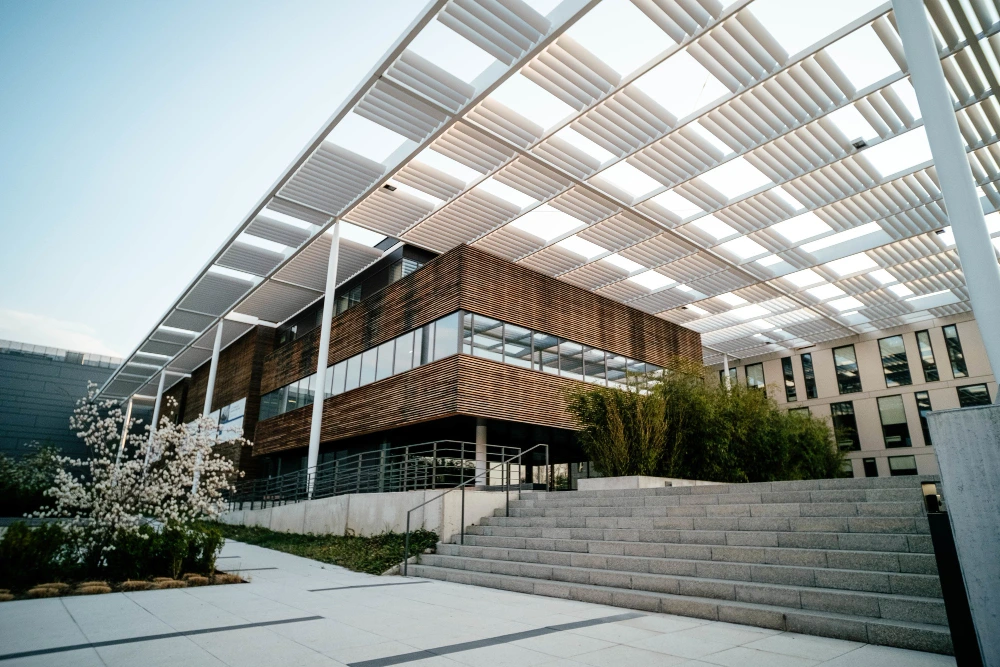
This blog highlights the critical role of exterior architectural rendering in modern real estate development. From navigating regulatory hurdles to building emotional connections with buyers, real estate 3D visualization acts as a bridge between a blueprint and a sold property. By exploring the Variants of 3D Exterior Rendering and sharing expert Tips to Improve Your 3D Exterior Rendering Techniques, we demonstrate how high-quality CGI reduces project risk and maximizes ROI for developers across the USA.
In the hyper-competitive world of property development, the first impression is often the only impression. Whether you are presenting to a local planning committee or pitching to a high-net-worth investor, the ability to showcase a property before the first shovel hits the ground is invaluable. Today, exterior architectural rendering has moved beyond being a “nice-to-have” marketing tool; it is now a mandatory requirement for securing approvals and driving pre-sales.
For developers and architects, the shift toward real estate 3D visualization represents a move toward total transparency and emotional storytelling. By leveraging high-quality 3D exterior rendering, stakeholders can see exactly how a building will interact with its environment, sunlight, and neighborhood, removing the guesswork that often leads to project delays.
The Strategic Power of Exterior Visualization
Exterior Visualization serves two primary masters in the real estate cycle: the regulator and the buyer.
1. Securing Regulatory Approvals
Planning boards are notoriously risk-averse. They struggle to interpret flat 2D blueprints and often fear that a new development will negatively impact the local skyline or “character” of the area. A professional 3D exterior rendering provides a “physical” proof of concept. It shows the building in its true context complete with accurate neighboring structures, streetlights, and landscaping proving that the project adds value to the community rather than detracting from it.
2. Capturing the Modern Buyer
Modern buyers are visual creatures. In an era of Instagram and Zillow, a “coming soon” sign with a technical drawing simply won’t cut it. Residential 3D Exterior Rendering allows developers to market an aspirational lifestyle. It shows a family enjoying a sunset on a balcony or the sleek reflection of a city skyline in the floor-to-ceiling windows of a penthouse. This emotional connection is what triggers a “buy” decision months or even years before construction is complete.
Variants of 3D Exterior Rendering
Not all renderings are created equal. Depending on the project’s stage, different Variants of 3D Exterior Rendering are employed:
- Photorealistic Stills: High-resolution images used for billboards, brochures, and web listings. These are the gold standard for 3d exterior rendering services usa.
- 360-Degree Panoramas: Allows users to “stand” on the street corner and look around the building in a virtual environment.
- Architectural Animations: Cinematic fly-throughs that show the building across different times of day or seasons, providing a sense of scale and motion.
- Photomontages: Integrating a 3D model into an actual photograph of the existing site to show perfect real-world alignment.
Tips & Software for 3D Exterior Rendering
To achieve world-class results, top firms utilize a specific stack of Tips & Software for 3D Exterior Rendering.
The Software Stack:
- Modeling: Revit and 3ds Max remain the industry leaders for structural accuracy.
- Rendering Engines: V-Ray and Corona Renderer are preferred for photorealism, while Lumion and Enscape are the go-to choices for real-time visualization.
- Post-Processing: Adobe Photoshop is essential for adding “life”people, birds, motion blur, and atmospheric depth.
Tips to Improve Your 3D Exterior Rendering Techniques:
- Prioritize Lighting: Use HDRI (High Dynamic Range Imaging) maps to create realistic sky environments. Lighting dictates the mood; golden hour renders typically perform better for residential sales.
- Weathering and Imperfections: A perfectly clean building looks fake. Adding slight “imperfections” like subtle dirt on a curb or a few fallen leaves makes the image believable.
- High-Quality Assets: Use high-poly 3D models for vegetation and vehicles. A low-quality “copy-pasted” tree can ruin an otherwise stunning 3D Exterior Rendering.
Read More:- Top 7 Tips to Improve Your 3D Exterior Rendering Techniques
Common Mistakes in Exterior Rendering
Even with the best software, many artists fall into Common Mistakes that can jeopardize a project’s credibility:
- Incorrect Scale: Placing a car or a person that is too large or too small relative to the doorframe breaks the viewer’s immersion immediately.
- Repetitive Textures: Seeing the same “wood grain” pattern repeat four times on a fence is a tell-tale sign of amateur work.
- Ignoring the Environment: A common error is rendering a building in a “void.” Without the context of the street, sidewalks, and neighboring buildings, the render feels disconnected from reality.
- Over-Saturation: While you want the colors to pop, making the grass “neon green” makes the project look like a video game rather than a real estate investment.
The Business Impact: 3D Exterior Rendering Services USA
In the American market, the ROI on 3d exterior rendering services is undeniable. For a multi-million dollar residential development, the cost of a high-end rendering suite is a fraction of a percent of the total budget, yet it is the primary driver for:
- Pre-Construction Funding: Banks and private equity firms require high-fidelity visuals to assess the marketability of a loan.
- Reducing Rework: Identifying that a specific cladding material looks “busy” or “drab” in a 3D model allows for changes before expensive materials are ordered.
- Marketing Efficiency: High-quality visuals generate significantly higher click-through rates on digital ads, lowering the “cost per lead” for real estate agents.
Why Residential 3D Exterior Rendering is Non-Negotiable
For luxury residential projects, the exterior is the “face” of the brand. Residential 3D Exterior Rendering allows developers to showcase various finish options such as different stone veneers or window frame colors to a buyer, allowing for a “custom-build” feel that commands a premium price.
By showing the property at night with warm interior lights glowing through the glass, you aren’t just selling a house; you are selling the feeling of “coming home.”
Conclusion: Visuals as a Foundation
In the modern real estate landscape, the digital twin of a building is just as important as the physical one. Exterior architectural rendering provides the clarity needed to navigate the complex world of city permits and the emotional resonance required to close a sale in a crowded market.
By avoiding Common Mistakes and utilizing the latest Tips & Software for 3D Exterior Rendering, developers can ensure their projects aren’t just built, but celebrated. If you want to secure faster approvals and higher-value buyers, investing in professional real estate 3D visualization is the most strategic move you can make.