
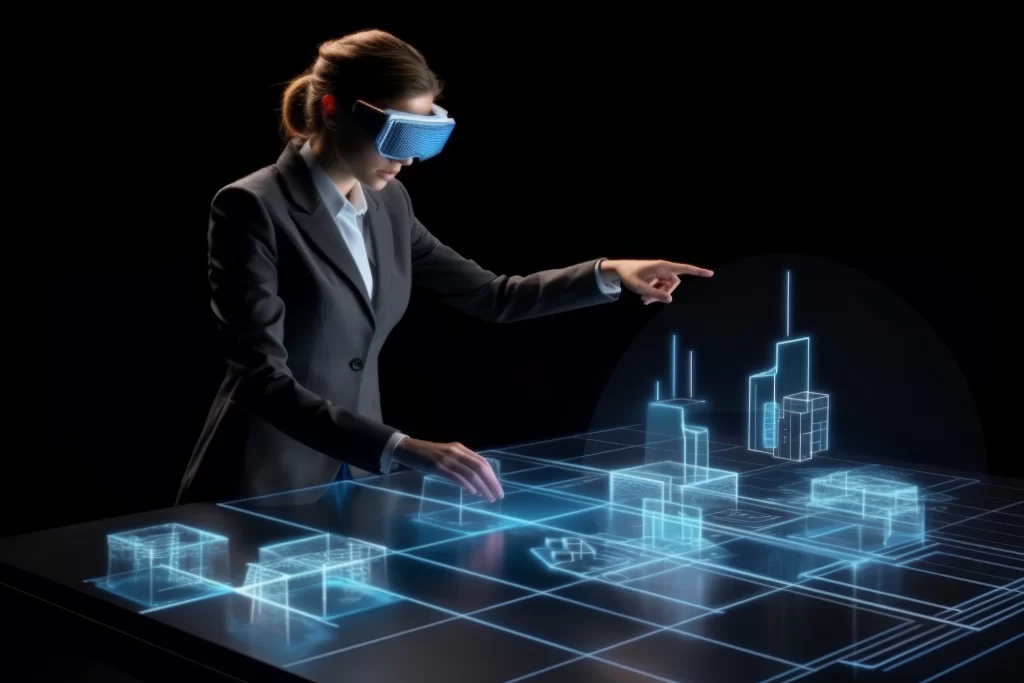
Real-time rendering allows designers and architects to visualize and modify 3D models instantly, transforming how projects are created and presented. It improves design speed, realism, client collaboration, and creative freedom while reducing errors and costs. This article explains the key advantages of real-time rendering and why it has become essential in modern design and architectural workflows.
Design and architecture are fields of industry that have undergone a fast and impactful revolution in recent years. Advantages of real time rendering spans across several industries. Compared to the traditional mode of rendering, which requires a long processing time, the real-time mode provides instant visualisation.
So, are real-time renderings helpful? Let’s discuss the advantages of real-time rendering and how this technology enhances work processes, creativity, and collaboration. We also address the growing importance of real-time rendering in buildings and its impact on contemporary design practice.
What Is Real-Time Rendering?
Real-time rendering is a real-time creation of an image or an animation when a user is digitally manipulating a 3D model. It was based on the advanced graphics processing units (GPUs) and the ideal rendering engines to deliver smooth images at high frame rates.
The technology gives designers control over lighting, material, textures, and a preview of the outcome in real time. The visual rendering of real-time rendering is attributed to the lack of restraint, making it popular in design and architectural work.
Key Advantages of Real-Time Rendering in Modern Design
The primary advantages of real-time rendering and that it is necessary for effective and innovative design processes.
Quickened Design Cycles and Process Efficiency
A significant benefit of real-time rendering is the dramatic increase in design process speed. Changes can be tried and results viewed immediately, eliminating the delays inherent in traditional rendering.
Its efficiency enables the teams to test several variations of the design rapidly, and this results in enhanced decision-making and quick completion of the project.
Increased Sharpness and Naturalism
The current real-time rendering engines offer very realistic lights, reflections, shadows, and textures. These images are similar to those found in reality, and thus, stakeholders can comprehend the designs in such a setting. This realism enhances trust on the design decisions and minimises the misinterpretation, particularly in the case of non-technical clients.
Better Client interaction and communication
The real-time rendering will make client presentations interactive. Clients can tour spaces, request real-time amendments, and provide real-time feedback.
Its participatory style promotes confidence, leads to increased satisfaction as well as minimises future expensive revisions of the project.
Creative Freedom and Design Exploration
Real-time rendering enables designers to be creative and experiment with ideas without technical constraints.
Encouraging Experimentation Without Risk
A conventional form of rendering may restrict creativity because of time and cost. Real-time rendering eliminates such barriers by enabling on-the-fly experimentation.
On several occasions, designers are able to experiment with styles, colors, and layouts within a short time, resulting to a greater number of creative and sophisticated designs.
Uninterrupted Interconnection with VR and AR
An immersive virtual reality and augmented reality experience is possible through real-time rendering. The technologies enable users to view designs at full size.
VR walkthroughs are used in architecture to improve emotional attachments and better validate designs before the construction starts.
Cost Saving and Risk Reduction
Real-time rendering aids in reduction of errors, minimizing costs and enhancing efficiency in a project.
Reduction of pre-construction errors
Real-time rendering, which visualizes each detail early, can reveal design flaws before construction begins.
ROI Over the Long-term
Although the first initial investment will be forced by the need to have real-time rendering tools, the tool will yield long term gains in the form of faster approvals and reduced rework.
Market Competitive Advantage
Real-time rendering renders the firm unique and competitive within the evolving design industry.
Competition in a Crowded Industry
The companies that use real-time rendering are innovative and technologically superior. Interactive presentations are good in attracting clients and securing projects.
Surviving in the Future of Design.
With the development of digital tools, real-time rendering has into a standard in the industry. Early adoption prepares the firms to deal with future technologies and workflows.
Applications of Real-Time Rendering
Real-time rendering is very popular in industries to improve visualisation, interaction and decision making in real time using real-time, fast and realistic digital experiences.
Architecture and Interior Design
Real-time rendering allows architects and interior designers to provide an experience of walking through a building, visualise materials in real time, and display designs interactively to clients.
Urban Planning Real Estate
Urban planners and real estate developers can use real-time rendering to depict large-scale development, simulate environments, and enhance communication with stakeholders.
Product Design and Furnishing
Real-time rendering is a method of presenting a product, a test material, a form, and a function to the designers to determine what is feasible and what not to produce physically.
Gaming and Entertainment
Gaming and entertainment sectors are also dependent on real-time rendering to provide an interactive environment, realistic characters, and an interactive experience to users.
Virtual Reality and Augmented Reality.
VR and AR applications are driven by real-time rendering, which enables users to engage in digital space in real time to train, design, and simulate.
Conclusion
The benefits of real-time rendering in architecture are far-reaching. The benefit of real-time rendering is hard to deny as it allows enhancing the speed of work and realistic visualization, as well as enhancing collaboration and minimizing risks. Real-time rendering is no longer a matter of choice, and instead, it is mandatory for professionals who want to be efficient, creative, and competitive.
FAQS
What types of industries are most benefited from real-time rendering?
Real-time rendering has been applied in many industries, among them architecture, interior design, real estate, product design, gaming, education, and manufacturing. It is used by architects in walking through structures and making presentations and by product designers in quick prototyping. It is used in gaming and entertainment. Real-time rendering is good in any location where visualization and interaction with users are needed in a fast and realistic manner.
Is real-time rendering hardware-intensive?
Real-time rendering works well with machines that have good GPUs, large RAM and new processors. It is, however, more accessible with the development of software optimization and cloud-rendering solutions. Most mid-range systems are now able to perform real-time rendering without any problem in architectural and design works. The selection of hardware is determined by the complexity of the project, the size of the scene, and the amount of visual realism that is needed.
What is the benefit of real-time rendering?
Live rendering enhances the aspect of collaboration because it enables the teams and clients to work together and view and make changes on the designs simultaneously. Designers are able to act on reviews instantly, experiment and fix problems through visual means. This understanding minimizes misunderstanding between architects, engineers and clients. Consequently, the speed of project completion is elevated, there is a greater clarity in the decisions, and the end results are more consistent with the expectations.
Is real-time rendering useful in risk reduction in projects?
Yes, real-time rendering assists in decreasing the risks of the project since the errors in design and conflicts are detected at an early stage. Through the image of spaces, materials, and lighting, pre-construction teams can identify problems that cannot be detected on drawings. Early identification eliminates costly alterations during construction, delays, and coordination. Such a proactive solution promotes a more effective organization of the project and improved budget management.
What is the primary benefit of real-time rendering in comparison to traditional rendering?
Interactivity and speed are the key benefits of real-time rendering. Real-time rendering offers immediate feedback as opposed to traditional rendering, which may take a few hours or days to execute. This assists designers in testing several ideas within a short period, enhances cooperation with clients, and minimizes project schedules. It also reduces mistakes at the initial stage,s thus saving time and expense at the latter developmental stages.
What is the use of real-time rendering in architecture?
Interactive walkthroughs, virtual tours, and realistic design presentations are created through real-time rendering in architecture. It is possible to demonstrate spatial planning, light, and surface finishes used by architects in real-time. This assists clients in understanding the design intent, making informed choices. It is also useful for sustainability analysis by simulating daylight, energy consumption, and environmental performance prior to the commencement of construction.