
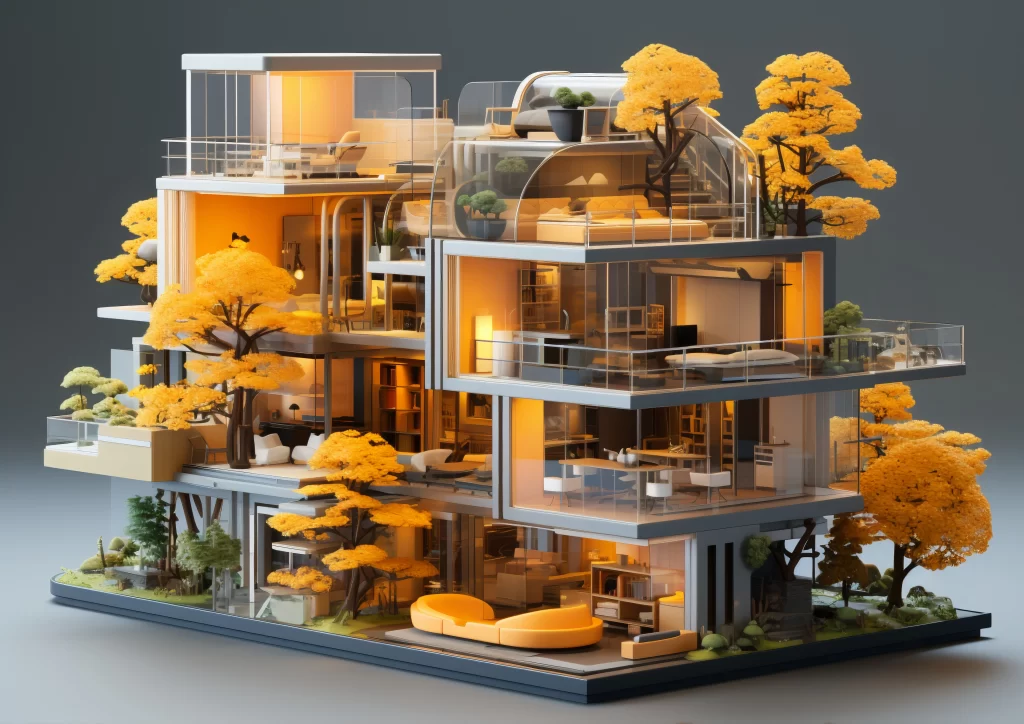
3D architectural visualization helps transform design concepts into realistic digital images, animations, and walkthroughs before construction begins. It improves design clarity, client understanding, and decision-making across architecture, real estate, and construction projects. This article explains the meaning, types, and key business benefits of architectural visualization in today’s competitive market.
Visual communication is very important in a growing and competitive real estate and construction business environment. Clients, investors, and stakeholders always like to visualize their project before construction begins. Architectural visualization can be used to create the gap between imagination and reality: between realistic renders and walkthroughs.
This blog discusses the meaning of 3D architectural visualization, its various types, and the benefits for architects, developers, and marketers.
What Is 3D Architecture Visualization?
3D Architectural visualization is the process of preparing a three-dimensional digital display of buildings, interiors, landscapes, and urban spaces with specialized software. These drawing designs are true to the architectural design, materials, lighting, textures, and spatial relationships before the start of construction.
However, unlike conventional 2D blueprints or technical drawings, 3D visualization enables viewers to gain an intuitive grasp of a project. It makes complicated architectural ideas seem real in the form of a picture, animation, or an activity that anyone, no matter their level of technical expertise, can interpret.
Visualization is used by architects, real estate developers, interior designers, and construction firms to convey design intent, obtain approvals, sell properties, and reduce costly design mistakes.
Why Architectural Visualization Matters Today
The current projects have become more complicated than before. Clients require transparency, accuracy, and trust before making significant financial decisions. 3D architectural visualization provides this understanding by by leveraging the AI Revolution in Architectural Visualization by:
- Simplifying the design process.
- Lessening team-to-team miscommunication.
- Cyrillomasonry allows design experimentation before construction.
- Improvement of client presentations and approvals.
Visualization is no longer a luxury but a necessity due to the digital transformation changing the construction industry.
Types of Architectural Visualization
Visualization of architecture has several types, each having their own benefits of architectural visualization depending on the stage of the project and business objective , aligned with the Future of Architectural Visualization.
Exterior Visualization
Exterior visualization deals with the exterior surface of a building. It presents the style of architecture, frontier, landscapes, and environment, and lighting conditions. These images are common in real estate marketing, competitions, and even presentations to investors.
Interior Visualization
Interior renders represent interior spaces like living rooms, kitchens, offices, hotels and store spaces. They assist clients in imagining layouts, the location of furniture, color, lighting, and textures. The interior visualization is particularly useful in cases of interior design and real estate developers.
3D Floor Plans
The 3D floor plans provide depth and context for a property, offering a bird’s-eye view. They depict spatial associations unlike the conventional 2D plans, and are used in residential and commercial property listings.
Architectural Animations
Animations are a cinematic walkthrough or flythrough of a project. They demonstrate the way spaces are linked and flow as well, which makes them suitable when it comes to presentations, exhibitions, and promotional videos.
The Business Benefits of Architectural Visualization
The benefits of visualization in architecture are way beyond beauty. It is a strategic business instrument that brings quantifiable value in various business sectors.
Faster Client Approvals
Clarity in images removes misunderstandings and makes customers perceive designs immediately. This enhances fast decision-making and approvals and eliminates delays in projects.
Better Marketing and Sales
Good renders and animations will draw in people and interest, as well as produce emotional attachment towards the potential buyers. Homes featuring professional images can sell more quickly and at higher prices.
Fewer design errors and Costs
It allows early detection of flaws in a design by the architects and developers through visualization. Modifications done at the design stage are much cheaper compared to the cost of modification at the construction stage.
Competitive Advantage
Companies with high visual quality are unique compared with competitors using simple drawings or poor-quality images. Powerful visuals increase the brand’s credibility and professionalism.
Increased Interteam Communication
Architectural visualization makes sure that the architects, engineers and contractors and clients understand the project on the same note. This alignment minimizes misunderstandings and wastage of money in rework.
Read More:- 10 Key Insights into Architectural Visualization Projects You Should Know
Future of Architectural Visualization
As the real-time rendering, artificial intelligence, and immersive technologies progress, the field of architectural visualization keeps developing. The future of design communication is the ability to engage in interaction, collaborate in a cloud environment, and create hyper-realistic visuals.
Companies investing in visualization technology will be in a better position to succeed in the long term as clients develop reduced expectations of simple presentations.
Conclusion
The visualization of architecture has changed the design, presentation, and selling of buildings. The large variety of architectural visualization types, including exterior renderings and interior designs, as well as animations and VR tours, can be used as effective tools of communication and marketing.
The benefits of the visualization of architecture are the acceleration of approvals, better sales, minimization of risks, and a high competitive advantage. The skill of presenting a project before it exists is no longer a luxury in the visual-first world, but rather a necessity.
FAQs
What Is Architectural Visualization?
Architectural visualization refers to the development of computer based pictures or animation depicting designs of buildings prior to building construction. It assists architects and developers to demonstrate external and internal spaces in an unambiguous manner. Designers insert materials, lighting, and environment in 3D software to create realistic images, enhance communication, presentation, and marketing of residential, commercial and urban development projects.
What Is a 3D Floor Plan?
A 3D floor plan is a representation of a building design in three dimensions. It is also more descriptive of room size, location of furniture and interrelationships than 2D plans. The plans aid buyers and clients in comprehending the relationship manner of spaces and how they work together, and are common in real estate listings, architectural presentation, and interior planning design.
What Is a 3D Walkthrough Animation?
A 3D walkthrough animation is a video that gives the sense of moving through an electronic environment like a home, office, and commercial edifice. It enables the audience to feel the layout, design, lighting, and ambiance in reality. Walkthroughs are often the norm in real estate marketing, architectural presentations, and client approvals to provide a realistic preview of an undertaking.
What Is 3D Modeling?
3D modeling refers to designing a three-dimensional digital representation of an object with the use of special software. Products, shapes, or structures are created following geometry, size, and features by designers. The models are the basis of rendering, animation, and virtual reality. 3D modeling is commonly applied in architectural, product design, game, and film, and production sectors.
What Is Photorealistic Rendering?
Photorealistic rendering refers to the production of very realistic 3D images that are very close to real-life photographs. It employs the use of advanced lighting, textures, shadows, and reflections to create realism. Usually, in architecture, real estate, and marketing of products, this kind of rendering is done in a manner that would be convincing and appeals to clients or customers, before a real-life production of the product.
What Is Augmented Reality (AR)?
The concept of augmented reality (AR) consists of the superposition of digital objects on the real world, using a smartphone, tablet, or AR glasses. AR does not substitute real-life, as opposed to virtual reality. It is applied in architecture, retail, education, and marketing to see products or designs in a world environment and enhance interaction and decision-making by the user.
Which Software Do You Use to Visualize 3D?
Software used for 3D visualization is 3ds Max, Blender, SketchUp, Maya, and Cinema 4D. The engines of rendering, such as V-Ray, Corona, and Lumion, produce realistic effects. The tools are used by professionals like Arktek in the creation of models, application of textures, control of light, and generation of images or animation of architecture, products, and virtual environments in various industries.
Read More:- Why Hiring The 3D Architectural Visualization Design Services Are Worth?