
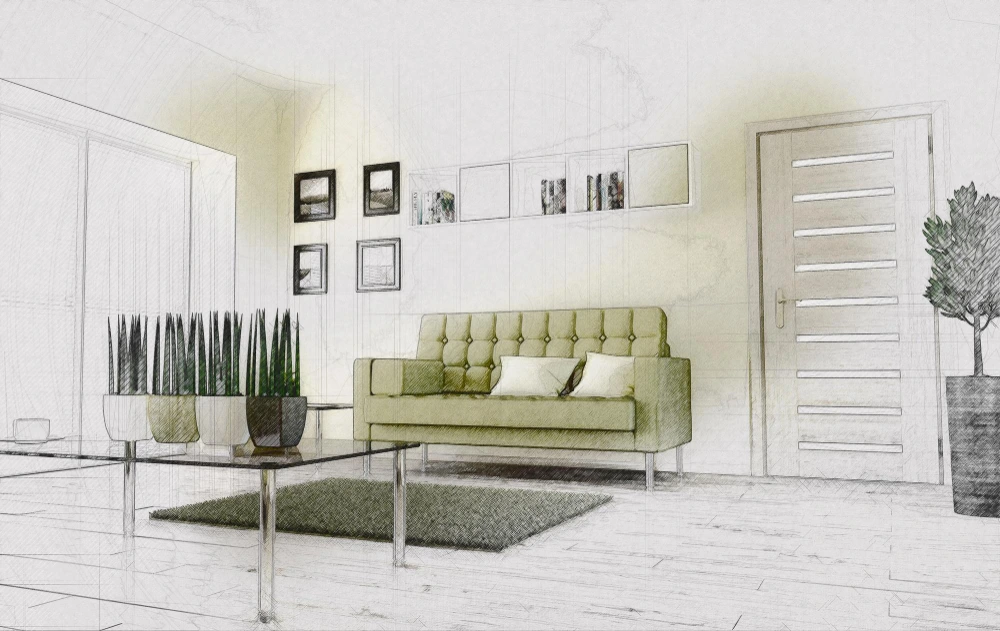
In the modern design landscape, High-Quality Interior Visualization is the key to turning abstract concepts into client approvals. This blog explores how 3d interior rendering services provide a competitive edge by eliminating guesswork and fostering emotional connections through storytelling. We examine the Benefits of 3D Interior Rendering Services, including improved contractor communication and early error detection. Ultimately, 3D Interior Visualization Services Shape Designs by allowing for real-time adjustments, ensuring that every interior architecture project is as functional as it is beautiful.
In the world of interior design, the bridge between a designer’s imagination and a client’s comprehension has historically been a difficult one to cross. For years, professionals relied on mood boards and material swatches to convey a “feeling.” However, in today’s high-stakes market, High-Quality Interior Visualization has become the definitive tool for closing that gap.
By utilizing 3d interior rendering services, designers no longer just describe a space they reveal it. This blog dives deep into how these digital tools are transforming design presentations and why 3D Interior Visualization Services Shape Designs from the very first concept.
The Evolution of the Design Presentation
Traditionally, an interior architect would present a “flat” vision: 2D floor plans, reflected ceiling plans, and perhaps a few hand-sketched perspectives. While artistic, these methods often led to “expectation gaps” where the finished project didn’t quite match what the client had envisioned.
Today, 3D Interior Rendering & its impact on interior Architecture cannot be overstated. We have moved from static, imaginative concepts to photorealistic certainties. High-quality visuals allow a client to see exactly how a brushed brass faucet looks against a matte navy backsplash under the specific warmth of a 3000K LED light. This level of detail has turned presentations from “pitches” into “immersive experiences.”
How 3D Interior Visualization Services Shape Designs
Visualization is often mistaken for a final step a “pretty picture” created at the end of the process. In reality, 3D Interior Visualization Services Shape Designs during the iterative phase.
1. Real-Time Spatial Problem Solving
When a designer builds a high-fidelity 3D model, they often discover spatial conflicts that are invisible in 2D. Perhaps a kitchen island is too close to a pantry door, or a custom light fixture hangs too low for the room’s proportions. High-quality visuals allow for these “virtual corrections” before a single piece of furniture is ordered.
2. Lighting and Material Interaction
One of the most complex aspects of interior architecture is the interplay of light and texture. 3D Interior Rendering uses “Global Illumination” algorithms to simulate how light bounces off surfaces. This helps designers decide if a room needs more natural light or if a glossy floor finish will create distracting glares.
The Benefits of 3D Interior Rendering Services
For design firms and independent contractors, the Benefits of 3D Interior Rendering Services extend far beyond aesthetic appeal. They are fundamental to business efficiency and client satisfaction.
A. Eliminating Client Hesitation
The primary reason for “design paralysis” is a client’s fear of making a mistake. By providing High-Quality Interior Visualization, you remove the risk. When a client can see the final result, their confidence sky-roots, leading to faster approvals and fewer “change orders” during the construction phase.
B. Streamlining Communication with Contractors
A render isn’t just for the client; it’s a blueprint for the craftsman. A carpenter can look at a high-quality 3D visual and immediately understand the joinery details or the intended finish of a bespoke wardrobe. This reduces errors on the job site and ensures the design intent is preserved.
C. Marketing and Portfolio Building
High-quality renders allow a firm to showcase their capabilities before they even have a portfolio of completed physical projects. For new firms, 3d interior rendering services provide the “social proof” needed to land high-end residential or commercial contracts.
The Power of Storytelling in Interior Renders
What separates a “good” render from a “transformative” one is the narrative. High-Quality Interior Visualization tells a story of how a space will be lived in.
- The “Lived-In” Detail: Adding a soft throw blanket over a chair, a half-read book on a coffee table, or the subtle steam rising from a cup of tea.
- Atmospheric Depth: Using “God rays” (volumetric lighting) to show sunlight streaming through a window, highlighting the dust motes in the air and the texture of the wooden floor.
- The Human Connection: Carefully placed “entourage” (3D people) can help a client visualize the scale of a lobby or the energy of a co-working space.
3D Interior Rendering & its Impact on Interior Architecture
The impact of these services is felt most in the “technical” side of the craft. Modern interior architecture is increasingly complex, involving integrated smart-home technology, hidden HVAC systems, and intricate lighting layers.
3D Interior Visualization allows architects to:
- Verify Sightlines: Ensure that a TV is visible from all angles of a lounge or that a receptionist has a clear view of the entrance.
- Test Furniture Ergonomics: See how different furniture layouts affect the “flow” of a room without moving a single heavy item.
- Acoustic Visualization: While visuals don’t “play” sound, they help designers plan for acoustic panels or soft surfaces by showing the volume and “hardness” of a space.
Best Practices for High-Quality Results
To ensure your visuals are truly transformative, keep these best practices in mind:
- High-Resolution Textures: Avoid “blurry” fabrics or wood grains. Use PBR (Physically Based Rendering) materials that react correctly to light.
- Accurate Scale: There is nothing that ruins a render faster than a chair that looks too small for the table. Every 3D asset must be scaled to real-world dimensions.
- Color Accuracy: Ensure your monitor is calibrated so that the “sage green” you show the client doesn’t turn out to be “mint” in real life.
- The “Hero” Shot: Every presentation needs one stunning image that captures the essence of the design usually a wide-angle shot that shows the relationship between different zones of a room.
Conclusion: The Future of Interior Presentations
As we move further into 2026, the demand for High-Quality Interior Visualization will only grow. We are already seeing a shift toward VR (Virtual Reality) walkthroughs and AR (Augmented Reality) apps that allow clients to “place” 3D furniture in their current rooms.
By embracing 3D Interior Visualization Services, you aren’t just following a trend; you are adopting a language of clarity. You are giving your clients the greatest gift a designer can offer: the peace of mind that comes from knowing exactly what their future space will look and feel like. Whether you are a solo designer or a large firm, the investment in 3d interior rendering services is an investment in the success of every project you touch.