
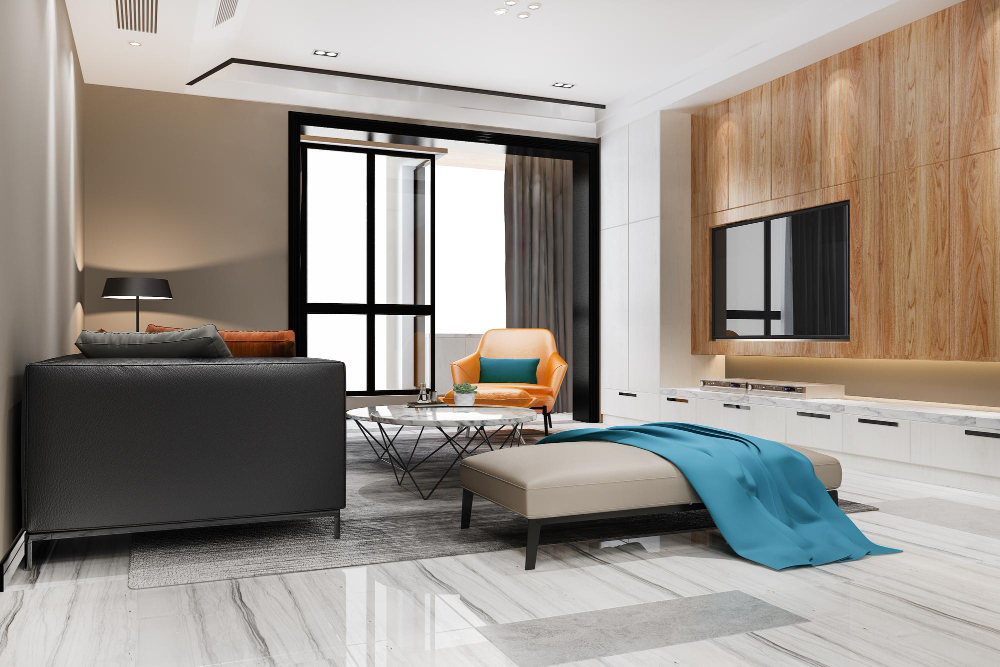
This blog compares how 3D interior rendering strategies differ for studio apartments, open-plan layouts, and traditional room-based floor plans. It explains the specific composition, lighting, and staging choices that bring each spatial type to life and connect with its intended audience.
Not all interior spaces are rendered the same way nor should they be. A compact 3D interior rendering studio apartment requires a completely different visual strategy from an expansive open-plan living area or a traditionally structured home with defined rooms. The space type, the intended occupant, and the emotional story each layout needs to tell all shape how a professional rendering studio approaches composition, lighting, camera angle, and staging, often supported by expert interior design rendering services and enhanced through virtual tour / walkthrough experiences.
In this article, we compare the open plan interior rendering approach with studio and traditional interior rendering design strategies exploring what works for each spatial type, why those choices are made, and how interior renderers create images that do not just show a space but make a prospective buyer, renter, or client feel something about it.
Studio Apartment Rendering: Making Every Square Metre Count
The fundamental challenge of 3D interior rendering studio apartment work is spatial honesty. A studio needs to feel functional, liveable, and aspirational without looking cramped, cluttered, or like a compromise. Professional renderers achieve this through several specific techniques.
Camera Angle and Focal Length
Wide-angle lenses (between 22mm and 28mm equivalent) are standard for studio renders because they maximise the apparent size of small spaces without introducing the distortion that makes rooms look unnatural. Camera placement is typically at the corner of the room or positioned just outside the boundary of the space to capture the maximum depth and deliver a sense of spatial flow.
Smart Staging
In a studio, every object in the render earns its place. Clutter even artfully placed communicates chaos in a small space. Successful studio renders stage the space at a level of occupation that suggests a specific and carefully curated lifestyle: a single quality sofa, a neatly set desk, a well-lit kitchen counter with minimal surface dressing. The goal is to sell the potential of the space, not overwhelm the viewer with its limitations.
Lighting as a Space Expander
Natural light is particularly powerful in studio renders. A well-placed window with morning or afternoon sun streaming across the floor creates depth, dimensionality, and warmth that makes small spaces feel far more generous than their square footage suggests. Layered artificial lighting a pendant over the kitchen island, a reading lamp beside the bed, under-cabinet strip lighting adds further depth and communicates functional zones within the open plan.
Open-Plan Rendering: Communicating Flow and Connection
Open-plan spaces present a different challenge: communicating how multiple functions cooking, dining, living, sometimes working exist in harmony within a single connected volume. For open plan interior rendering, the primary objective is to show the flow between zones while maintaining a sense of visual coherence.
Zoning Through Composition
Professional renderers of open-plan spaces carefully orchestrate the scene so each functional zone reads clearly but contributes to the overall composition. A kitchen island that anchors the culinary zone, a dining table that bridges kitchen and living areas, and a living furniture grouping that defines the social space all positioned so the viewer’s eye travels naturally through the entire scene without confusion.
Material Consistency
In open-plan renders, material palette consistency across zones is critical. Jarring transitions between flooring types, ceiling treatments, or colour schemes fragment the visual narrative. The most effective open-plan renders present a cohesive material story perhaps one hero flooring material running throughout, with colour and texture variation introduced through furniture, soft furnishings, and accent elements that reinforces the sense of a unified, well-designed space.
Lifestyle Storytelling
Open-plan living is fundamentally a lifestyle proposition the idea that cooking, socialising, and relaxing can coexist seamlessly. The most successful open plan interior rendering work populates the scene with subtle lifestyle cues: a dinner party being prepared, a weekend breakfast being assembled, children’s toys neatly corralled in a designated corner. These human details make the space feel genuinely lived-in and aspirational simultaneously.
Traditional Interior Rendering: Respecting Character and Proportion
Traditional room-based floor plans separate kitchen, dining room, reception rooms, defined bedrooms require a traditional interior rendering design approach that respects the character of the architecture and highlights the virtues of defined, purposeful spaces. Here, proportion, symmetry, and material richness are typically the primary storytelling tools.
Symmetry and Balance
Traditional interiors often feature symmetrical arrangements paired armchairs flanking a fireplace, balanced bedside tables in a bedroom, formal dining layouts and renders should reflect and honour this architectural intention. Off-centre or asymmetrical staging in a traditionally proportioned space can feel architecturally illiterate and undermine the room’s character.
Rich Textures and Period Detail
For traditional interior rendering design, material quality is everything. Polished hardwood floors, panelled walls, moulded cornices, stone fireplaces these details define the value proposition of the space and need to be rendered with precision and care. High-resolution texture mapping that captures the grain of timber, the reflectivity of marble, and the weight of heavy drapery is essential.
Conclusion: The Right Strategy for the Right Space
There is no universal approach to interior rendering. The spatial type, the target audience, and the key selling points of each layout determine the right camera position, staging level, lighting mood, and material emphasis. Whether it is a compact studio that needs to feel aspirational within tight constraints, an open-plan living area that needs to communicate effortless modern living, or a traditionally proportioned room that needs to feel richly characterful the rendering strategy should always serve the specific story the space needs to tell.
For more on how interior visualisation drives design decisions and client confidence, read our article on how high-quality interior visuals transform design presentations. To explore how floor plan renderings support the interior layout process, see our guide on designing your home with architectural floor plan renderings. And for a broader look at how visualisation elevates the creative process, explore our piece on enhancing your creativity with 3D architecture visualization.