
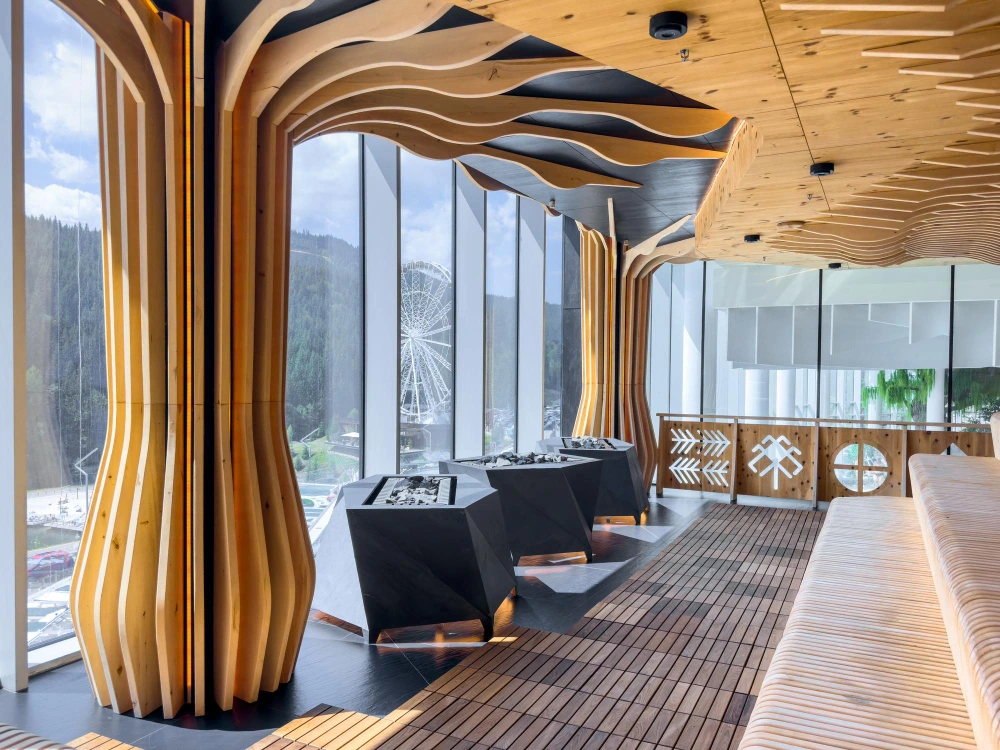
Hospitality interior design has always been about crafting unforgettable guest experiences, and hospitality 3D rendering is now central to how those experiences get planned, refined, and marketed. This guide explores how hotel interior rendering is reshaping the way hospitality projects move from concept to completion, and how Arktek 3D’s hospitality 3D rendering services support designers at every stage.
Guests remember how a space made them feel the warmth of lobby lighting, the comfort of a well-planned room layout, the energy of a hotel bar at golden hour. Hospitality interior design is fundamentally about engineering these emotional responses, and increasingly, that engineering happens digitally before a single wall goes up.
Hospitality 3D rendering has transformed how hotels, resorts, restaurants, and event venues move from concept to construction. What once relied on mood boards, sample materials, and imagination now happens through photorealistic visualization that lets every stakeholder see, evaluate, and refine the final space well in advance.
Why 3D Rendering Has Become Essential in Hospitality Design
Hospitality projects carry unique pressure. Unlike residential interiors, these spaces must simultaneously deliver brand identity, operational efficiency, emotional atmosphere, and guest comfort often across dozens or hundreds of nearly identical rooms that still need to feel distinctive and considered.
3D Rendering in Interior Design gives hospitality teams a way to test and validate these competing priorities before committing to construction. Designers can explore lighting scenarios, material combinations, and spatial layouts with full visual accuracy, catching potential issues long before they become expensive on-site corrections.
What Rendering Means in Interior Design for Hospitality Spaces
Understanding what Rendering Mean in Interior Design specifically for hospitality helps clarify why it has become indispensable. At its core, rendering is the process of generating a photorealistic image from a 3D model but in hospitality contexts, this process must account for factors unique to the industry: ambient lighting that shifts throughout the day, material durability alongside visual appeal, and layouts that must work for both single guests and groups.
Using tools like 3ds Max, Corona Renderer, and V-Ray, the Arktek 3D team produces images that show precisely how a hotel room, lobby, or restaurant will look and feel once completed long before construction crews arrive on site.
Benefit 1: Early Validation of Design Concepts
One of the clearest Benefits of Interior Design Rendering is the ability to validate ideas before they become costly commitments. Hospitality projects often involve multiple stakeholders owners, operators, brand representatives, investors each with their own expectations for how a space should look and function.
Hospitality 3D interior rendering services allow design teams to present concepts that everyone can evaluate using the same visual reference. This dramatically reduces the back-and-forth that happens when stakeholders are working from sketches or written descriptions alone, and it surfaces concerns early, when changes are still inexpensive to make.
Benefit 2: Testing Multiple Design Directions
Hospitality brands frequently want to explore several aesthetic directions before settling on a final concept perhaps a warmer, more residential feel versus a sleeker, more contemporary one. 3D Interior Decoration choices like furniture style, color palette, and material finish can all be visualized side by side through rendering, allowing teams to compare options directly rather than relying on imagination or static sample boards.
This capability is particularly valuable for boutique hotels and independent restaurant concepts, where the interior design itself often functions as a core part of the brand identity rather than a backdrop to it.
Benefit 3: Communicating Vision to Investors and Developers
Hospitality projects are capital-intensive, and securing investment or developer buy-in often depends on the ability to communicate a compelling vision clearly. Hotel interior rendering does this far more effectively than floor plans or written proposals.
A photorealistic image of a finished lobby, guest room, or rooftop bar gives investors something tangible to respond to and in many cases, these renderings generate genuine excitement and even pre-sales or booking interest long before the physical property exists. This is one of the most commercially significant ways Interior Designers Can Leverage 3D Rendering to support project financing and stakeholder buy-in.
Benefit 4: Applications in Luxury Residential-Style Hospitality
The line between high-end hospitality and residential design has blurred considerably, particularly in boutique hotels, branded residences, and luxury resort villas. Interior 3D Rendering for Luxury Residential Projects principles transfer directly into hospitality contexts where guests expect a residential level of comfort and personalization.
This crossover means that rendering teams working on hospitality projects increasingly need the same attention to material authenticity, lighting nuance, and spatial warmth that defines top-tier residential visualization treating each guest room or suite with the same care as a high-end private home.
Benefit 5: Supporting Marketing and Pre-Launch Campaigns
High-quality renderings have become standard tools in hospitality marketing. Before a hotel opens its doors, hospitality 3D rendering services produce the visual assets used in press releases, social media campaigns, and booking platform listings.
These renderings often shape a property’s first impression with the public, making the quality and accuracy of the visualization directly tied to commercial outcomes. A compelling render of a rooftop pool or signature suite can drive bookings and media interest well ahead of a property’s actual opening date.
The Role of AI in Hospitality Visualization
AI Tools Transforming Interior and Architectural Design are beginning to change how hospitality concepts move through early-stage ideation. AI-assisted tools can help generate quick concept variations different color schemes, furniture arrangements, or lighting moods allowing designers to explore options rapidly before committing to a full production render.
This doesn’t replace the photorealistic detail required for final client presentations or marketing materials, but it does speed up the exploratory phase of hospitality design, giving teams more room to experiment before locking in a direction.
How Hospitality Teams Can Transform Interiors with 3D Rendering
For hospitality brands and designers looking to elevate their next project, the path to Transform Interiors with 3D Rendering starts with treating visualization as an integral part of the design process rather than an afterthought. Engaging a rendering partner early during concept development rather than just before launch allows visualization to inform design decisions rather than simply illustrate ones already made.
This collaborative approach is where Arktek 3D’s hospitality 3D interior rendering services add the most value: working alongside designers throughout the process, from initial mood and material exploration through to final marketing-ready imagery.
Partner with Arktek 3D for Your Hospitality Project
Whether you’re designing a boutique hotel lobby, a resort suite, or a destination restaurant, Arktek 3D brings the technical precision and creative sensitivity that hospitality projects demand. Our structured workflow from briefing through composition, materialization, and final delivery ensures every render reflects both your design vision and your brand’s identity.
Related reading
For a deeper look, see our guide to brand-standard hotel rendering: Guide to brand-standard hotel rendering.