
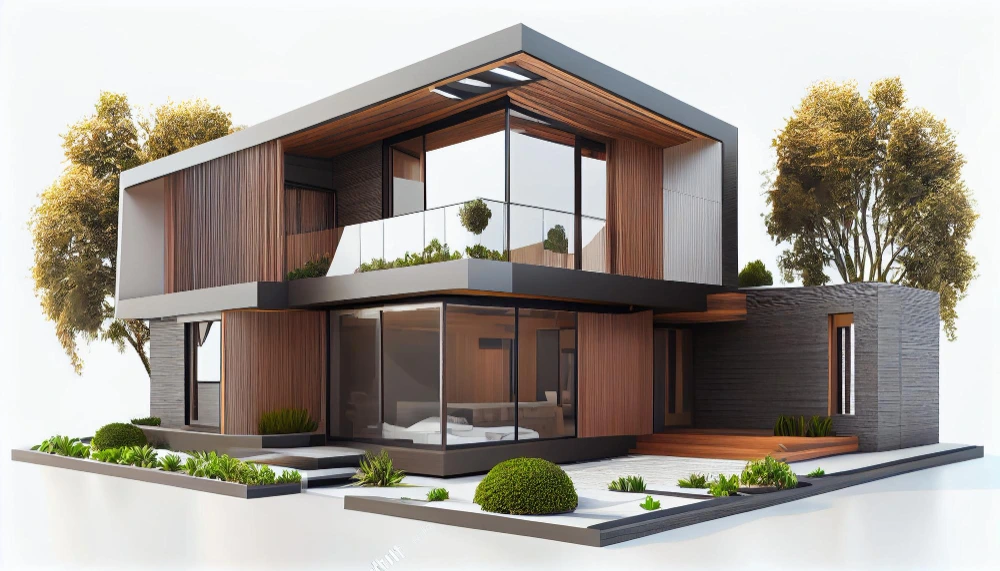
Mixed-use developments are among the most visually and technically complex projects in modern architecture. This blog explores how Arktek 3D’s 3D exterior rendering services handle multi-layered briefs involving residential, commercial, and urban planning components covering the top variants of 3D exterior rendering, best camera angles, best practices for realistic outdoor visualizations, cost considerations, and the measurable 3D exterior rendering benefits that help developers win approvals and accelerate pre-sales.
This is where exterior rendering services become indispensable. And for architects and developers working on multi-component projects, the quality and completeness of commercial exterior visualization can directly determine whether a project gets funded, approved, and sold or stalls.
Arktek 3D has spent over a decade handling exactly these kinds of complex, multi-layered briefs. Here is how they do it, and what you should know about 3D exterior rendering services before your next major development.
What Makes Mixed-Use Briefs Different
A standard residential or single-use commercial building has a clear visual identity. Mixed-use developments do not. They require urban development rendering that communicates multiple user experiences simultaneously the ground-level pedestrian, the office worker on the fifth floor, the rooftop resident, and the city planner reviewing the project’s impact on the surrounding streetscape.
A single render rarely captures all of this. A well-planned 3D exterior architectural rendering strategy for a mixed-use development typically involves:
- Multiple camera angles showing different zones of the development
- Day and night lighting scenarios to represent retail activity vs residential atmosphere
- Street-level and aerial perspectives to demonstrate scale and urban integration
- Material differentiation to distinguish each functional zone visually
- Landscape and context integration to show how the development connects to its neighborhood
Without a structured approach to all of these, even technically accurate renders can fail to communicate the project’s real character and value.
Guide to 3D Exterior Rendering for Architects and Designers
For architects and designers approaching a mixed-use brief, a guide to 3D exterior rendering for architects and designers starts with understanding the purpose of each visual before a single model is built.
Every render should answer a specific question for a specific audience:
- Planning committee renders need to show massing, setbacks, shadow impact, and streetscape compatibility. Accuracy and context matter most here.
- Investor presentation renders need to communicate potential, prestige, and return on investment. Atmosphere, quality of materials, and human scale bring these images to life.
- Marketing renders need to be aspirational. They should sell the lifestyle of living, working, or shopping in the development not just the architecture.
- Construction team renders need precision and material clarity for coordination and specification review.
Arktek 3D‘s process begins with a detailed project consultation that establishes exactly which renders are needed, for whom, and what each one must achieve. This brief-first approach is what separates professional real estate rendering services from generic visualization work.
Top Variants of 3D Exterior Rendering
Understanding the top variants of 3D exterior rendering helps developers and architects choose the right combination for their project:
Street-Level Renders
The most commonly used perspective for mixed-use projects. These show the building as a pedestrian would experience it capturing ground-floor activation, signage, facade materials, landscaping, and human scale. Essential for retail and hospitality components.
Bird’s Eye / Aerial Renders
Critical for large masterplans and urban development rendering. These views communicate the full footprint of the development, its relationship to surrounding streets and buildings, and the layout of shared spaces and green areas.
Twilight and Night Renders
Mixed-use developments are active around the clock. Twilight renders capture the transition from day to evening, showing lit retail frontages, illuminated lobbies, and residential terraces. These are high-impact images for marketing and pre-sales.
Photomontage / Context Renders
These blend 3D renders with actual site photography, showing the proposed development within its real physical context. Particularly valuable for planning submissions and community consultation.
Seasonal and Weather Variants
Showing the same development in summer greenery, autumn light, or a clear winter sky adds depth to a marketing suite and demonstrates how the design performs across conditions.
Arktek 3D routinely delivers all of these as part of a comprehensive 3D exterior rendering services package for mixed-use clients.
Top Angles for Architectural Exterior Rendering
Choosing the top angles for architectural exterior rendering is both a science and an art. For mixed-use developments, the most effective angles include:
Corner Perspectives
Showing two facades simultaneously, these shots communicate the building’s presence at a street intersection and are ideal for developments with prominent corner sites.
Entrance Focus
A render centered on the primary entrance communicates welcome, scale, and brand identity. This is the hero shot for most marketing suites.
Aerial Overview
For projects with multiple buildings or a complex site layout, a high-angle overhead view gives stakeholders the spatial understanding that no street-level render can.
Human-Eye Level
Renders taken at approximately 1.6 meters height feel natural and relatable. They place the viewer inside the experience rather than outside looking in.
Rooftop and Amenity Views
For residential-commercial developments with rooftop spaces, terraces, or shared amenities, dedicated renders of these areas are essential selling tools.
Arktek’s project managers work with architects to select the most strategic combination of angles for each development, ensuring the full story of the project is told visually.
3D Exterior Rendering Benefits for Mixed-Use Projects
The 3D exterior rendering benefits for mixed-use developments are substantial and measurable:
Faster Planning Approvals
Planning committees consistently respond more positively to photorealistic contextual renders than to technical drawings alone. Arktek clients have reported approval timelines accelerating by up to 40% when high-quality urban development rendering is part of the submission.
Pre-Sales Success
Real estate developers regularly use real estate rendering services to sell units before construction begins. For mixed-use projects, this is especially powerful commercial tenants, retail operators, and residential buyers can all be engaged simultaneously through purpose-built render suites.
Investor Confidence
A well-visualized mixed-use development tells a compelling financial story. When investors can see exactly how retail, office, and residential components interact and activate each other, commitment decisions become faster and larger.
Reduced Design Revision Costs
Identifying material clashes, scale issues, or facade inconsistencies in the rendering stage is exponentially cheaper than discovering them during construction. 3D exterior architectural rendering acts as a visual audit of the design before it is built.
Best Practices for Creating Realistic Outdoor Visualizations
Following best practices for creating realistic outdoor visualizations is what separates photorealistic results from renders that look artificial or flat:
Accurate Lighting Simulation
Using HDRI environments and physically accurate sun angles for the project’s actual geographic location produces naturally credible light and shadow. Arktek uses V-Ray and Corona Renderer to achieve cinema-grade lighting accuracy.
PBR Material Application
Physically Based Rendering (PBR) materials respond to light the way real surfaces do. Glass reflects sky. Concrete absorbs shadow. Metal catches glare. Without PBR, surfaces look dead.
Populated Scenes
People, vehicles, street furniture, and vegetation make a render feel inhabited and alive. An empty scene no matter how architecturally accurate fails to communicate the energy of a live mixed-use development.
Environmental Context
Integrating the actual surrounding streetscape, existing buildings, and landscaping through photomontage or modeled context ensures the development feels rooted in its real location, not floating in a white void.
Post-Production Refinement
Color grading, atmospheric depth, lens effects, and subtle imperfections added in post-production are what give the best renders their photographic quality.
Exterior 3D Rendering Costs: What to Expect
Exterior 3D rendering costs for mixed-use developments vary based on scope, number of views, complexity of the model, and turnaround requirements. At Arktek 3D, pricing is structured and transparent:
- Single view (Basic): from $800 per render ideal for concept validation
- 3-view package (Professional): $2,200 suitable for planning submissions and initial investor decks
- 5-view package (Premium): $3,800 comprehensive marketing suite with multiple scenarios and lighting variants
- Enterprise / Ongoing: Custom pricing for large-scale masterplans and multi-building developments with dedicated project management
All packages include commercial usage rights, multiple file formats, and a satisfaction guarantee. For mixed-use developments requiring 10–20+ renders across residential, retail, and commercial zones, enterprise packages with volume pricing offer the most efficient solution.
Rush delivery is available for tight proposal deadlines, and Arktek’s standard turnaround for static renders is 2–3 days for single images and 5–7 days for larger packages.
How Arktek Handles the Complex Brief
What makes Arktek 3D the preferred choice for mixed-use commercial exterior visualization comes down to three things: process, team, and technology.
The process begins with a structured brief intake not just collecting files, but understanding the project’s commercial goals, planning context, target audience, and key milestones. From there, a dedicated project manager coordinates the full workflow: modeling, lighting, materials, revisions, and delivery.
The team brings architectural and design backgrounds to every project, meaning they understand not just how to render a building, but why certain design decisions were made and how to represent them faithfully. With a 50+ strong team of 3D artists, Arktek can handle large mixed-use suites simultaneously without compromising quality or timeline.
The technology 3Ds Max, V-Ray, Corona Renderer, Lumion, and Unreal Engine ensures that every 3D exterior rendering services deliverable meets the photorealistic standard that modern clients and planning authorities expect.
Conclusion
Mixed-use developments demand the most from exterior rendering services multiple audiences, multiple functional zones, multiple visual stories that must all be told coherently and compellingly. The 3D exterior rendering benefits for these projects are significant: faster approvals, stronger pre-sales, better investor outcomes, and fewer costly late-stage design changes.
Arktek 3D’s combination of structured process, architectural expertise, and industry-leading software makes them the right partner for any development where the stakes of visual communication are high.
Read More:– Why Stunning Exterior Visuals Help Secure Real Estate Approvals and Buyers
Related reading
For more on this, see our guide to 3D rendering turnaround times.