
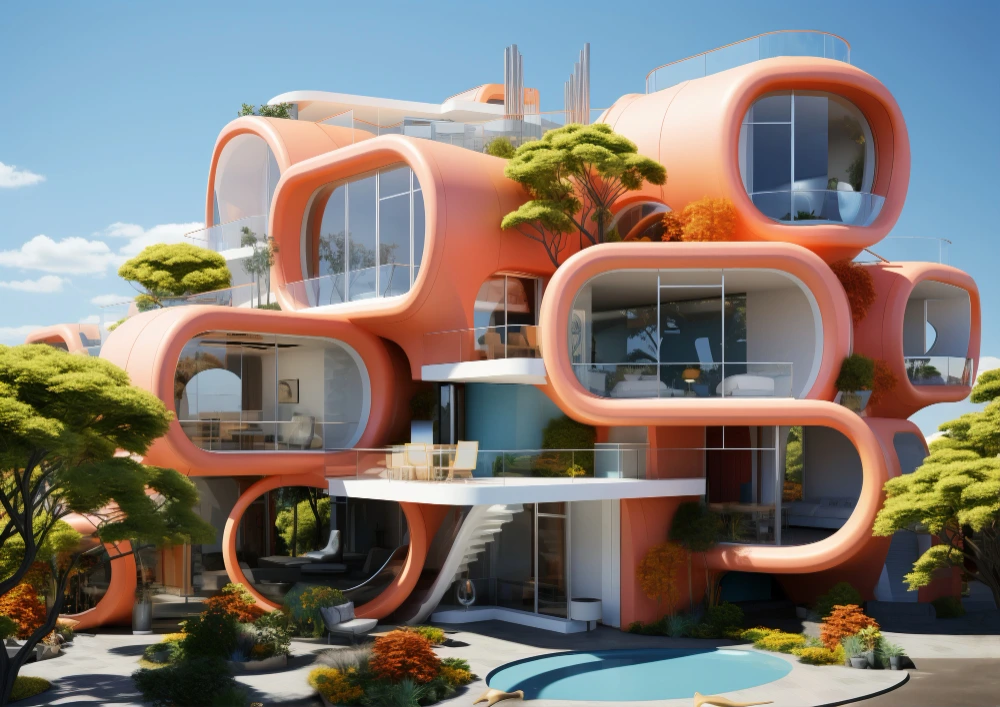
This guide walks you through the complete 3D rendering process as practiced by Arktek 3D from initial discovery and 3D modeling to materialization, post-production, and final delivery. Whether you’re an architect, interior designer, or real estate developer, understanding the 3D rendering workflow helps you collaborate smarter and get results that truly reflect your vision.
If you’ve ever wondered what happens between receiving a set of architectural drawings and delivering a stunning photorealistic image, this guide is for you. The 3D rendering process is a structured, multi-stage journey that transforms raw design data into compelling visual output and understanding it can help architects, developers, and designers work more efficiently with their rendering partners.
At Arktek 3D, we’ve refined our 3D rendering workflow to be fully transparent, predictable, and collaborative. Every stage involves clear approval milestones, ensuring the final result aligns with your expectations before we move to the next phase.
What Is the 3D Rendering Process?
The Process of 3D Rendering refers to the series of technical and creative steps used to produce a photorealistic image from a 3D model. It involves geometry creation, camera setup, texturing, lighting, rendering calculations, and post-production all working together to simulate how a space or building would look in the real world.
Whether the output is for 3D Rendering for Marketing, client presentations, planning approvals, or investor decks, every render begins with the same foundational workflow. What changes is the level of detail, the complexity of the scene, and the specific requirements of the project.
Step 1: Discovery & Project Brief
Every great render starts with a thorough briefing. Before any software is opened or a single polygon is placed, the Arktek 3D team engages in detailed discussions with the client to understand the project vision, design intent, reference imagery, timeline, and budget.
This stage sets the foundation for the entire architectural rendering process. A well-defined brief eliminates guesswork, reduces revision cycles, and ensures that the production team has everything they need to interpret the design accurately. Clients are asked to share CAD files, floor plans, mood boards, material preferences, and any contextual information about the site.
The outcome of Step 1 is a formally approved brief and a clearly aligned scope both sides know exactly what is being produced, to what standard, and when.
Step 2: 3D Modeling
With the brief approved, the team moves into base modeling. This is where the architecture or interior space comes to life as a three-dimensional object. Using industry-standard tools like 3ds Max, the Arktek team builds geometrically accurate models that faithfully represent the design.
For Interior Architectural 3D Rendering Services, this means modeling room layouts, ceilings, furniture placement, built-in elements, and joinery details. For Exterior Architectural 3D Rendering Services, it involves recreating the building facade, site topography, landscaping, and surrounding context.
At this stage, basic shaders are applied to define form and volume. This is not about final materials yet it is purely about getting the geometry right. No client review happens here; the team works internally to ensure structural accuracy before presenting anything.
Step 3: Composition & Atmosphere
This is one of the most critical stages in the entire 3D rendering workflow and one where client input is actively invited. Once the model is in place, the Arktek team works with the client to define camera angles, time of day, and overall lighting mood.
Should the exterior be shot at golden hour or under a clear midday sky? Should the interior feel warm and intimate or bright and airy? These decisions dramatically affect how the final image reads. Clients are shown composition drafts that allow them to evaluate framing, perspective, and design direction free from the distraction of textures or materials.
This is the final checkpoint before production enters its most detailed and time-intensive phase. Any conceptual changes should be raised here. This approach is central to what makes a Guide to Creating Realistic 3D Renders actionable rather than theoretical decisions made early save time and money later.
Step 4: Materialization & Lighting
Once the composition is locked, the focus shifts to realism. This step involves applying final materials, textures, and refined lighting in line with the approved mood. Surfaces that were previously basic shaders now become polished concrete, brushed brass, warm timber, or textured stone each one calibrated for how it interacts with light in the scene.
Render Resolution in 3D Rendering becomes a key consideration at this stage. The team sets up rendering parameters that balance image quality with production time, selecting appropriate resolution outputs based on final usage whether that’s a large-format print, a web asset, or a full HD marketing visual.
For 3D Rendering in Interior Design, materialization is where a space truly begins to feel livable. For exterior work as covered in a proper Guide to 3D Exterior Rendering for Architects & Designers this phase includes detailed facade textures, environmental lighting, shadow studies, and preliminary background context.
Step 5: Adjustments & Detail Enrichment
No render goes from rough draft to final image in one pass. The adjustment stage is where the scene gets polished props are added, vegetation is populated, human figures are placed for scale, accessories are layered in, and the overall atmosphere is fine-tuned.
This stage is about enrichment, not structural changes. The Arktek team refines details incrementally, with the option for additional feedback sessions as needed. This iterative approach ensures the image gradually builds toward photorealism without losing track of the original brief.
For clients using best 3D Rendering service providers, this stage is what separates a competent render from an outstanding one. The difference between a good image and a great one often lies in the quality of this enrichment work.
Step 6: Final Delivery
The last stage of the 3D Rendering production pipeline is post-production and delivery. Final renders are processed, colour-graded, and exported in the required formats whether JPEG, PNG, TIFF, or any other format suited to the client’s intended use.
At Arktek 3D, final images are delivered ready for immediate use in presentations, planning submissions, real estate listings, or 3D Rendering for Marketing campaigns. The fully set-up scene is also preserved as a base for potential animation projects, making future output fast and cost-effective.
How This Applies to Interior vs. Exterior Projects
While the core stages remain the same, there are notable differences in how the architectural rendering process unfolds depending on the project type.
For Interior Architectural 3D Rendering Services, the process is driven by spatial detail furniture selection, lighting fixtures, material finishes, and the play of natural and artificial light within a contained environment. Every surface, shadow, and reflection matters.
For Exterior Architectural 3D Rendering Services, the focus shifts to facade design, massing, landscaping, and the relationship between the building and its context. Sky conditions, surrounding buildings, and pedestrian scale all contribute to the final image’s credibility.
Understanding both tracks helps clients set realistic expectations and provide the right reference materials at the right time.
The Future of 3D Rendering
The Future of 3D Rendering points strongly toward speed, interactivity, and integration with AI-assisted tools. Real-time rendering engines are reducing the time required to produce high-quality output, while AI upscaling and denoising technologies are improving image quality without requiring exponentially more processing power.
Among the key 3D Rendering Trends shaping the industry are immersive virtual reality walkthroughs, interactive real-time configurators for real estate platforms, and integration with BIM workflows. At Arktek 3D, we continue to invest in these capabilities to ensure our clients benefit from the most current production methods available.
Work with Arktek 3D
Whether you need a single hero exterior image or a full interior suite for a luxury residential project, Arktek 3D brings structure, clarity, and creative excellence to every engagement. Our step-by-step 3D rendering workflow is designed to keep you informed and in control at every stage from brief to final delivery.
Ready to begin? Contact the Arktek 3D team today and let’s talk about what your project needs.
Related reading
For more on this, see our guide to 3D rendering turnaround times.
One Response