
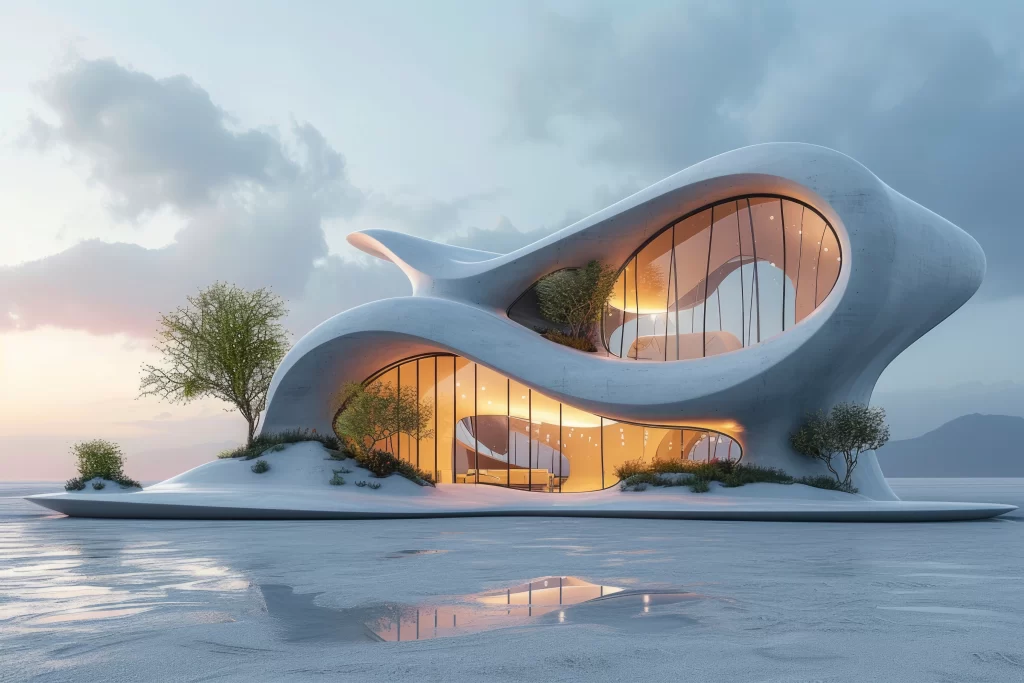
This blog explores how photorealistic architectural rendering transforms digital models into lifelike visuals that mirror real-world lighting, textures, and materials. It explains the complete workflow from 3D modeling to post-production and highlights key elements that make renderings truly realistic. The article also covers its applications in architecture, interior design, and real estate marketing, along with a comparison to standard 3D rendering. Finally, it looks at future trends like AI, AR, VR, and real-time rendering shaping the next generation of architectural visualization.
Visual communication is vital in the field of architecture and real estate in the modern design-centered industries and plays a key role in architectural visualization. Clients, investors, and professionals who want to purchase a home demand to see real-life representations of the projects suggested to them in detail before any point of construction is made. This has rendered photorealistic architectural rendering one of the most useful in the current architecture, whereby designers are able to transform conceptual models into realistic architectural images that depict the correct lighting, texture, ambiance, and quality of the materials, clearly explaining what is photorealistic rendering.
Be it the home or a commercialized building, interior design or landscape, photorealistic renderings enable the stakeholders to know how the structure appears and feels in reality and highlight why 3D architectural visualisation is important. The article discusses the definition of photorealistic architectural rendering, its mechanism, and how to produce very realistic images that are memorable.
What Is Photorealistic Architectural Rendering?
Photorealistic architectural rendering is a process that comes up with ultra-realistic representations of architectural projects in terms of digital design tools and rendering software and is a core component of 3D architectural visualization. These images are similar to the real-life photographs since they reproduce real-life conditions of light, shadow, texture, materials, reflections, weather, and environmental features.
A photorealistic rendering is an upgrade to the simple 3D models or concept drawings and is used to assist clients in seeing the actual appearance of the buildings and interior spaces in a realistic manner. The renderings are very popular in terms of presentations, designing approvals, marketing, and virtual staging.
Photorealistic rendering is a development of photorealistic architectural visualization, with emphasis on realism, precision, and beauty.
Why Photorealistic Rendering Is Important in Architecture?
Photorealistic renderings are used by architects, interior designers, real estate developers, and 3D studios due to their unsurpassed clarity and realism, highlighting the advantages of architectural visualization services for planning and communication.
Key Benefits:
- Helps clients get to know the final design prior to building.
- Enhances the accuracy of design with precise visualization.
- Quickens the approval and decision-making of clients.
- Improves the marketing of real estate and property.
- Minimizes misunderstanding between architects and investors.
The visualization of photorealism assists in countering the technical design document and the imagination of the real world.
How Photorealistic Architectural Rendering Works?
The process of developing the semblance of the architectural design realistically involves technical accuracy, architectural expertise, and artistic imagination.
The process is outlined as follows:
1. 3D Modeling
The architects and designers rely on software, such as Revit, 3ds Max, or SketchUp, to develop an elaborate 3D model of the building. This feature includes floor plans, room structure, doors, windows, elevations, and elements around.
2. The use of Realistic Materials.
Then wood, glass, concrete, metal, marble, fabric, tiles, and textures of walls are implemented. Realism is created through the high-resolution textures, which respond to the light and reflections as they would in real life.
3. Lighting Setup
One of the most important factors in architectural photorealistic rendering is lighting. There is a simulation of natural daylight, interior lighting, sunset lighting, and even weather-based lighting by the designers to add to realism.
4. Rendering
The 3D model is rendered and transformed into a photorealistic image with the help of specialized rendering software like V-Ray, Corona, Enscape, or Lumion. These rendering engines mimic real-world physics to create the correct shadows, reflections, and lighting effects.
5. Post-Production
During the last step, the colours, contrast, depth, sky replacement, landscaping, and detailing of the environment are being adjusted with the help of such tools as Photoshop or Lightroom.
This workflow transforms a static 3D model into a realistic visual representation of the final architectural project.
Elements That Make a Rendering Photorealistic
In order to create a splendid, realistic architectural rendering, designers should pay attention to detail. The following are some of the key factors:
Accurate Lighting
The lighting must be consistent with reality, such as the direction of the sunlight, shadows, interior lighting, and the light in the room.
Material Realism
There should be proper scaling, roughness, reflection, colour depth, and surface quality of the textures.
Depth and Perspective
The correct camera angles, depth of focus, and proper positioning of the perspective make it look real and provide visual harmony.
Personal and Environmental History.
Incorporation of natural features such as people, vehicles, flora, sky, clouds, and environment makes the image appear to be real and relatable.
Realistic Composition
The final render must remain using photographic concepts of balance, focus, foreground detailing, and visual hierarchy.
Photorealistic Rendering for Interior and Exterior Architecture
Photorealistic rendering is different in interior and exterior spaces.
Photorealism Exterior Rendering.
Outside renders emphasize the design of the facade, building material, landscapes, roads, parking space, lighting, shadows, weather conditions, and environment.
Realistic Interior Rendering.
The interior renderings depict living rooms, kitchens, retail spaces, offices, bedrooms, and commercial spaces and have the correct furniture, decoration, flooring, lighting, and spatial styling.
There are companies dealing with architectural 3d rendering services, and they make sure that the interior and exterior are made precise and realistic.
Applications of Photorealistic Architectural Renderings
Photorealistic images apply in many industries that including:
- Real Estate Marketing: Utilized in brochures, websites, project portfolios, online tours, and other 3D-visualization marketing methods to find buyers before construction.
- Client Presentation and Design Approvals: Visual renderings are used by architects to explain design concepts and seek approvals.
- Virtual Staging: The interiors are displayed by the use of digital furniture, lighting, and decorations by property developers.
- Walkthrough and Animation: It is possible to convert 3D visuals into a 3d architectural visualization walkthrough to allow the viewer to interactively explore spaces.
Photorealistic Rendering vs Standard 3D Rendering
| Feature | Standard 3D Rendering | Photorealistic Rendering |
| Visual Quality | Basic | Highly realistic |
| Texture Detail | Moderate | Extremely detailed |
| Lighting Simulation | Limited | Accurate and natural |
| Real-World Feel | Low | Very high |
| Suitable for Marketing | Limited | Excellent |
Photorealistics are more elaborate, realistic, and visually appealing to the eyes and, therefore, best suited for client presentation and marketing.
Industries Using Photorealistic Architectural Visualization
- Residential architects
- Commercial property developers
- Interior designers
- Real estate marketing agencies
- Furniture and décor brands
- Urban planning consultants
Photorealistic architectural visualization is useful in the development of the design as well as the promotional materials due to its accuracy.
The Future of Photorealistic Rendering
The future of photorealistic architectural rendering is with the new technologies like Artificial Intelligence, Virtual Reality, Augmented Reality, and real-time rendering.
- AI will be used to automate the lighting, material choice, and staging.
- Engines used in real-time rendering will allow a real-time design visualization.
- The interactive project presentations will be increased with the use of VR-enabled walkthroughs.
- AR will enable the clients to view designs in real-life settings through mobile devices.
These technologies render it more accessible, quicker, and even more lifelike.
Conclusion
Architectural visualization in the modern world has required the application of photorealistic shooting in architectural design. It has increased communication, precision in designs, and realizes architectural ideas in breathtaking realism. You can be a designer, architect, developer, or even marketer, but investing in high-quality photorealistic renderings assists in making better decisions and also produces high visual impact.
In exterior architecture, interior staging, virtual tours, marketing brochures, and so forth, photorealistic pictures are reinventing the future of architectural design presentation, planning, and construction.