
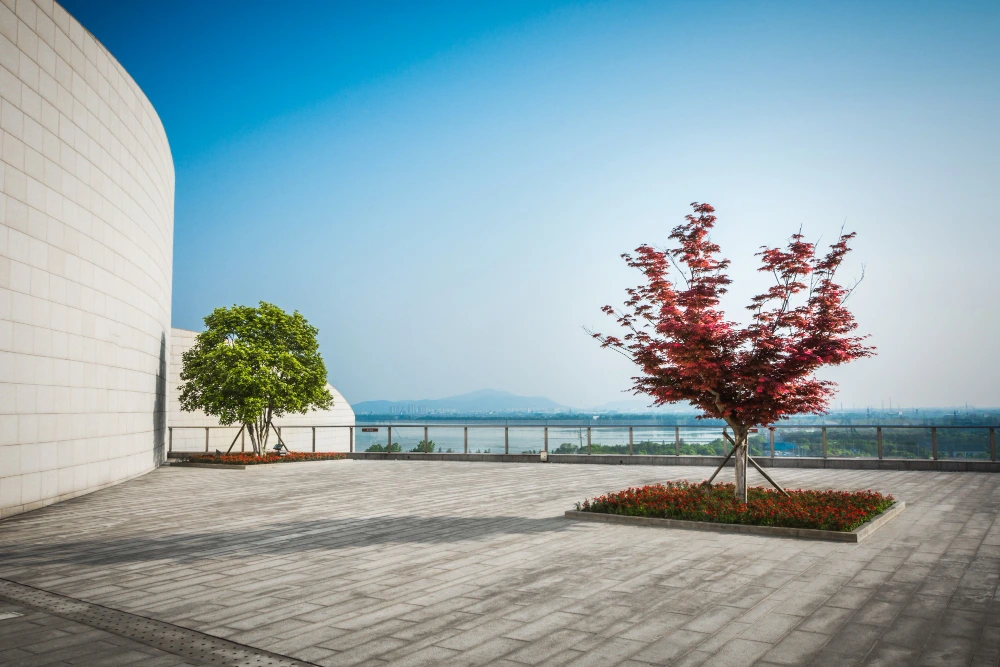
This in-depth guide explores the technical and psychological art of Realistic Outdoor Visualizations. We delve into the “perfectly imperfect” world of 3d architectural exterior rendering, highlighting how 3D Landscape Architecture Rendering Elevates Outdoor Design by simulating nature and light. From the Benefits of Using Exterior Home Rendering for private clients to why 3D Exterior Rendering Services are Essential for Real Estate approvals, this blog provides a roadmap for architects and developers to turn digital concepts into tangible, high-value reality.
In the competitive world of design and development, creating a digital world that feels indistinguishable from reality is the “Holy Grail.” While interior architectural visualization focuses on the intimate details of a room the texture of a velvet sofa or the grain of a marble countertop Realistic Outdoor Visualizations must contend with the infinite, chaotic variables of the natural world. From the way light scatters through a humidity-heavy atmosphere to the irregular growth patterns of local flora, the exterior environment is a complex beast to tame.
Whether you are designing a private boutique garden or a sprawling commercial plaza, mastering the art of 3d architectural exterior rendering is what separates a “computer drawing” from an evocative masterpiece. This blog explores the best practices, technical maneuvers, and business advantages of high-end exterior visualization in 2026.
The New Standard: Why 3D Landscape Architecture Rendering Elevates Outdoor Design
For decades, the “site” in architectural drawings was often treated as a secondary thought a flat green plane with a few “lollipop” trees scattered around a building. Today, 3D Landscape Architecture Rendering Elevates Outdoor Design by treating the environment as a living, breathing component of the structure itself.
Modern landscape architects use these tools to simulate ecological performance. They can show how a specific species of oak will provide shade in five years, or how a bioswale will manage runoff during a heavy storm. By visualizing the “green” infrastructure alongside the “gray” infrastructure, designers create more harmonious, sustainable, and socially responsible spaces. This holistic approach ensures that the building doesn’t just sit on the land, but exists with it.
Technical Best Practices for Realistic Outdoor Visualizations
To achieve true photorealism, an artist must look beyond the building and focus on the “perfectly imperfect” nature of the outdoors. Here are the industry-standard best practices used by Top Architecture Firms:
1. Mastering Global Illumination and HDRI
Outdoor lighting is never a single point of light. To get realistic shadows and reflections, professionals use HDRI (High Dynamic Range Imaging) maps. These are 360-degree photographs of real skies that project accurate light, color, and intensity onto your 3D model.
The Nuance: If your scene is set at “Golden Hour,” every surface from the glass windows to the concrete driveway should catch a hint of warm, orange light. If you use a standard “sun” light without an HDRI, the shadows will look unnaturally black and the highlights will look “blown out.”
2. The Power of “Scatter” for Vegetation
In 3D Exterior Rendering for Landscape, manually placing every blade of grass or every leaf on a hedge is a recipe for a “fake” look. Using “scattering” plugins (like Forest Pack, Carbon Scatter, or the native scattering tools in Enscape) allows you to distribute varied vegetation realistically.
The Secret to Realism: Nature hates perfect symmetry. To break the “digital” feel, you must randomize the rotation, scale, and color tint of your plants. A lawn that is perfectly even and bright green looks like plastic; a lawn with a few weeds, slightly dry patches, and varying heights looks like a home.
3. Atmospheric Effects and Aerial Perspective
In the real world, the air isn’t empty. It contains dust, moisture, and pollutants. Objects further away appear slightly desaturated and blue-tinted because of the volume of air between the viewer and the object. Adding a subtle “Environment Fog” or “Aerial Perspective” in your rendering engine creates a sense of immense scale. This is a critical technique in 3d architectural exterior rendering for large-scale developments where you need to show the building’s relationship to distant mountains or city skylines.
4. Weathering, Grit, and “Real-World” Textures
A common mistake in interior architectural visualization and exterior work alike is making everything too clean. Clean concrete does not exist in nature. To make an outdoor scene believable, you must add “micro-details”:
- Leaking: Subtle water stains under windowsills or roof edges.
- Edge Wear: Slight chipping or discoloration on the corners of stone paths.
- Organic Growth: A tiny bit of moss in the shaded cracks of a brick wall.
3D Exterior Rendering Services are Essential for Real Estate
From a commercial standpoint, the move toward 3D Exterior Rendering Services are Essential for Real Estate is driven by the need to mitigate risk and maximize pre-sales. When a developer is pitching a multi-acre project, stakeholders need to see the “lifestyle” impact before they commit millions.
Phasing and Growth Visuals
One of the most powerful uses of exterior rendering is showing “Project Phasing.” A developer can show what the community looks like on Day 1, and then show a second render of Year 10, with the trees fully grown and the ivy climbing the walls. This helps buyers understand the long-term value of their investment.
Community Integration and Public Perception
Securing permits often involves public hearings. If a neighborhood is worried that a new tower will “cast a shadow” over a local park, an accurate 3d architectural exterior rendering can prove exactly where the shadows will fall at every hour of the year. This level of transparency builds trust with planning committees and local residents.
The Benefits of Using Exterior Home Rendering for Private Clients
For residential architects, the Benefits of Using Exterior Home Rendering go straight to the client’s emotional core.
- Material Confidence: Most clients struggle to visualize how a small 4×4 material sample will look when it covers a 2,000-square-foot facade. Rendering allows them to see the difference between “Midnight Slate” and “Charcoal Grey” under the actual sun of their specific geographic location.
- Indoor-Outdoor Flow: By using interior architectural visualization techniques to look out through a virtual window, you can show the client exactly how their kitchen will feel when it overlooks the newly designed patio.
- Cost Avoidance: Changing a stone facade to a wood siding takes five minutes in a rendering suite but costs fifty thousand dollars on a construction site.
Common Pitfalls to Avoid
Even with the best software, certain “tells” will ruin the illusion of your Realistic Outdoor Visualizations:
- Floating Geometry: Ensure your trees, cars, and people are actually “touching” the ground. Even a 1cm gap between a tire and the pavement will make the car look like it’s floating.
- Tiling Textures: If you can see a repeating “pattern” on a large brick wall or a grass field, the viewer’s brain instantly flags it as “fake.” Use “randomized UV” offsets or “stochastic tiling” to hide these patterns.
- Static Water: If your render includes a pool or a lake, the water shouldn’t look like glass. It needs subtle ripples and “caustics” (the dancing light patterns reflected on the bottom of the pool).
Conclusion: Designing the Future Environment
As real-time rendering engines like Enscape and Twinmotion continue to evolve, the line between a photograph and a render is disappearing. Realistic Outdoor Visualizations are no longer just about the building; they are about the atmosphere, the ecology, and the human experience of being outside.
By following these best practices and understanding the Benefits of Using Exterior Home Rendering, you can ensure your projects aren’t just seen they are felt. Whether you are aiming to win an international design competition or close a high-stakes real estate deal, the quality of your outdoor visuals is the foundation of your success. In 2026, we don’t just build structures; we build worlds.