
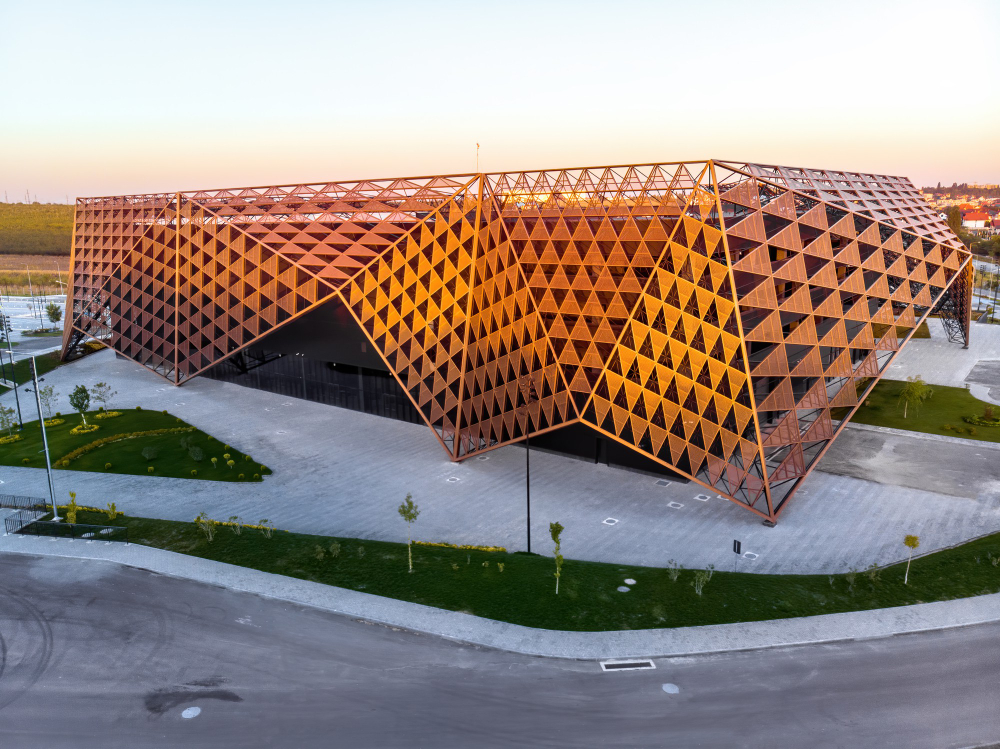
This blog explores why environmental context and surrounding landscape elements are critical to creating compelling 3D exterior renderings. It explains how smart use of terrain, vegetation, lighting, and neighbouring structures elevates architectural visualisations from basic models to immersive, client-winning visuals.
When you look at a truly compelling architectural visualisation, you rarely notice only the building. What draws you in is the whole picture the dappled light filtering through trees, the footpath leading to the entrance, the neighbouring properties that frame the structure, the season baked into every leaf and shadow. That is the power of exterior rendering with surroundings and 3D exterior renderings done right, especially when delivered through high-quality 3D architectural visualization services. Without these surrounding elements, even a technically flawless building model can look lifeless, staged, and unconvincing.
For architects, developers, and real estate marketers, context is not a decorative afterthought. It is the difference between a render that gets filed away and one that closes a deal. In this article, we explore why surrounding context is a fundamental part of professional exterior rendering with surroundings, and how getting it right transforms the way clients, investors, and planning bodies respond to a design.
Why Context Is a Core Element, Not an Add-On
A building does not exist in isolation. Every structure relates to its site its orientation to the sun, the slope of the land, the flow of pedestrian traffic, the character of the street. When a 3D exterior rendering accurately captures these relationships, stakeholders immediately understand scale, proportion, and spatial fit. When context is missing, those judgements become difficult, and doubts creep in.
Failing to reflect a building’s relationship to its surroundings is one of the most common reasons architectural renders fail to land with non-technical audiences. Councils, clients, and investors do not read blueprints but they instantly understand a photorealistic image that shows exactly how a proposed building will sit within its environment.
The Key Contextual Elements That Elevate Exterior Renders
1. Vegetation and Landscape Design
Trees, hedges, planted borders, and ground cover are not just decorative. They communicate scale, soften hard architectural lines, and anchor a building to its site. Choosing vegetation that matches the local climate and geography species-accurate, seasonally appropriate signals to reviewers and clients that the design is thoughtful and site-specific. In 3D exterior rendering landscape work, this level of detail can make a scene feel genuinely inhabitable rather than artificially constructed.
2. Terrain and Topography
Slopes, contours, and elevation changes profoundly affect how a building reads in a render. Flat terrain can make structures look arbitrary, while accurately modelled topography communicates a real sense of how the architecture responds to its site. For projects with significant grade changes hillside homes, terraced developments, coastal properties terrain accuracy is non-negotiable.
3. Hardscape and Street Furniture
Pathways, parking areas, retaining walls, outdoor lighting, benches, and driveways are functional elements that also serve as visual anchors. They place the building firmly in a real-world context and help viewers understand everyday use. A well-composed foreground with a clear path leading to the entry, vehicles in the drive, and appropriate outdoor furniture creates the kind of scene that triggers emotional connection a key driver in both sales and planning approvals.
4. Neighbouring Structures and Urban Context
Whether the project sits in a dense urban street, a leafy suburban neighbourhood, or a rural landscape, surrounding structures set the scale and character of the scene. Neighbouring buildings, even when rendered as simplified placeholder forms, give reviewers and clients the spatial information they need to judge how the design fits its context. This is particularly important in planning submissions where visual impact assessments must demonstrate neighbourhood sensitivity.
5. Lighting and Atmosphere
Light transforms context into mood. The direction, colour temperature, and intensity of light whether golden-hour warmth, overcast midday diffusion, or dramatic evening ambience changes how every element in the scene reads. Skilled studios use lighting to guide the viewer’s eye toward key features, create depth across the foreground-to-background composition, and make materials and textures feel tangible and real.
The Three-Plane Composition Principle
Professional architectural visualisers typically think about scene composition in three planes: a foreground that immediately captures attention (a pathway, a planted border, a parked car), the building as the clearly defined midground hero, and a background that places the project firmly in its setting whether that is a city skyline, a rural hillside, or a coastal horizon.
This approach to exterior rendering with surroundings is borrowed directly from professional photography and cinematography. Leading lines a path, a fence line, a garden edge draw the eye naturally toward the architecture, creating a sense of depth and storytelling that flat renders simply cannot achieve. For landscape and exterior specialists, mastering this composition discipline is as important as any technical rendering skill.
Context and Client Confidence
The commercial case for investing in rich contextual rendering is clear. When clients can see their proposed building accurately placed within its real-world environment with the right trees, the right streetscape, the right light they make faster decisions, raise fewer revision requests, and feel more confident moving forward. For developers marketing properties pre-construction, contextual renders create the emotional connection that drives enquiries and pre-sales.
If you want to explore how environmental detail transforms exterior architectural presentations, take a look at our work on 3D landscape architecture rendering. For a deeper look at the full range of exterior visualisation approaches, our extensive guide to 3D exterior rendering for landscape covers the core principles in detail. You can also explore how aerial perspectives complement ground-level context in our article on why aerial exterior renders are a must for large developments.
Conclusion
A building render without context is a model. A building render with thoughtfully crafted landscape, terrain, surrounding structures, and lighting is a story. The most effective 3D exterior rendering landscape work does not just show what a structure looks like it communicates where it belongs, how it will feel to approach and inhabit, and why it fits its site. Investing in contextual quality is not a luxury upgrade; it is the foundation of professional architectural visualisation.