
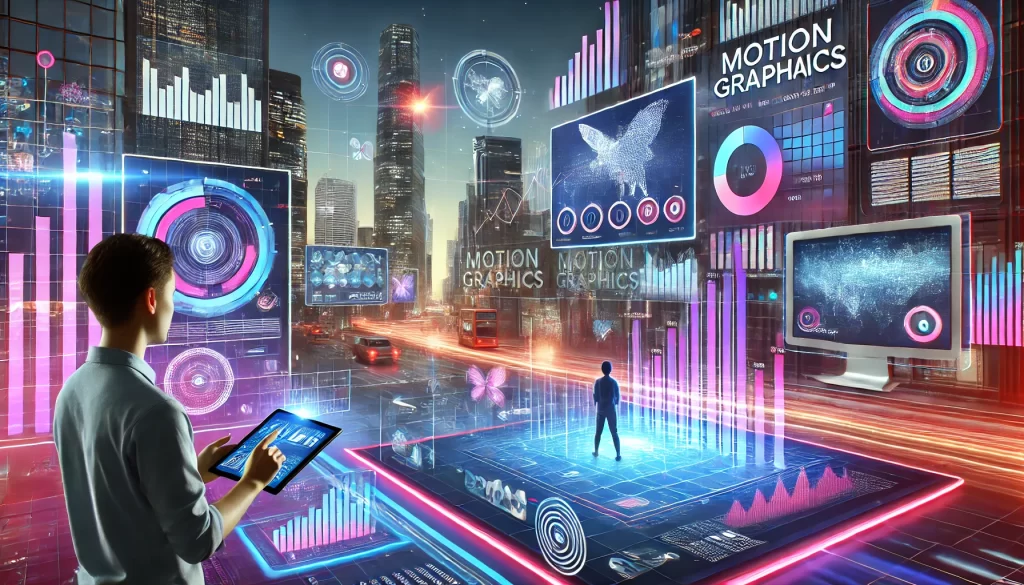
In a fast-moving digital world, audiences scroll past static images and generic ads in seconds. Motion design helps brands cut through that noise. It covers everything from subtle hover effects on a web page to animated charts, product demos and fully produced explainer videos, all delivering a business message in a way that is engaging and easy to understand.
Compared with live-action video, motion graphics are usually easier to produce in volume and adapt across channels. Brands can reuse animated logos, characters and transitions from campaign to campaign, keeping their identity consistent while controlling costs. And with 3D animation now widely accessible, motion graphics have become one of the most powerful tools for brand storytelling.
What Is Motion Design?
Motion design, also known as motion graphics, combines graphic design and animation to bring static elements such as type, illustrations, shapes, products and images to life. Voice-over, music and sound effects are often added to strengthen the story.
Unlike character-driven traditional animation, motion design focuses on fluid movement, kinetic typography, animated infographics and visual effects that deliver information clearly. It is widely used in marketing, advertising, brand identity, UI design and social media.
2D vs. 3D Motion Graphics
| 2D motion graphics | 3D motion graphics | |
|---|---|---|
| Look | Flat illustrations, icons, kinetic type | Realistic or stylized objects, environments and lighting with depth |
| Best for | Explainers, infographics, social posts, UI animation | Product demos, launches, brand films, technical explainers |
| Strength | Fast to produce and easy to iterate | Shows products from every angle, highly immersive and premium |
Key Applications of Motion Design in Marketing
- Animated explainer videos: break complex topics into simple visuals.
- 3D product demos and launches: show features from multiple angles, simulate real-world use or reveal internal components. See how to make 3D product animations for marketing.
- GIFs and looping videos: drive engagement and shares on social media.
- Interactive presentations: give corporate pitches and investor decks a premium feel.
- Website and UI animation: hover effects, loaders and page transitions that improve user experience. Read how 3D animation enhances UX design.
- Video ads and promotional content: strengthen storytelling and brand recognition.
- Cinemagraphs: photos where only one part moves subtly, creating an eye-catching effect.
How 3D Motion Graphics Strengthen Brand Storytelling
3D motion graphics combine realistic animation, visual effects and narrative so that a brand’s story feels natural and immersive. Compared with still images or flat 2D graphics, 3D lets companies present products, complex ideas and brand values with depth and emotion. Learn more about storytelling in 3D visualization.
- Explain abstract concepts clearly: turn financial systems, data flows or technology workflows into easy-to-follow animated sequences.
- Create immersive brand worlds: stylized environments, characters and transitions invite viewers into the brand’s universe.
- Show products in action: exploded views and real-world simulations are especially valuable for tech, manufacturing and healthcare.
- Build credibility: polished, modern visuals signal professionalism, attention to detail and quality.
Global consumer-tech, sportswear and automotive brands routinely use 3D product animation for launches because it builds anticipation and gives products a premium feel. The same techniques are now accessible to growing businesses.
The Benefits of Motion Graphics Marketing
Motion graphics do more than make content look good. They improve user experience, increase engagement and support conversions across channels:
- Grab attention: movement stands out in crowded social feeds, inboxes and ad placements.
- Make complex messages simple: animation explains products and processes faster than text alone.
- Improve recall: combining visuals, motion and sound makes messages more memorable.
- Support conversions: clear explainer and product videos on landing pages help visitors understand the offer and take action.
- Increase time on site: engaging video keeps visitors on your pages longer, which supports your wider SEO and content goals.
- Work across every platform: the same assets can be adapted for websites, landing pages, email, Instagram Reels, YouTube and paid ads.
- Strengthen brand identity: a consistent animation style makes a brand easier to recognize.
- Deliver long-term value: 3D assets can be repurposed for new campaigns, product variants and formats, so the initial investment keeps paying back.
How Motion Graphics Are Made: Step by Step
A structured workflow keeps the final animation aligned with brand goals. A 3D production adds modeling and rendering stages to the standard motion design process. Our 3D animation brief checklist is a good place to start.
- Creative brief: define the project and its purpose (explainer, product launch, social campaign), key messages, target audience, delivery formats and reference examples.
- Script and storyboard: structure the story, write the voice-over and sketch the key scenes and transitions. This prevents unnecessary revisions later.
- Style frames: set the color palette, typography, illustration or 3D style so stakeholders can see the final look early.
- 3D modeling and design (for 3D projects): build products, characters, environments and brand assets in 3D, styled to the brand.
- Animation: start with a rough “blocking” pass of key movements, then refine timing, transitions and effects.
- Sound design and voice-over: add narration, music and sound effects for emotional impact.
- Rendering and export: render the final video and export it in the aspect ratios and file sizes each platform needs.
Motion Design Tips for Marketers
1. Create a Motion Design System
Build a library of reusable animated logos, type effects and transitions to keep every campaign on-brand.
2. Design Mobile-First
Most content is viewed on phones. Keep animation simple, text minimal and visuals bold, and design for vertical formats where needed.
3. Stay on Brand
Use a consistent color palette, typography and animation style that follows your brand guidelines.
4. Keep It Concise
Attention spans are short, so get to the point. As a guide:
- 15–30 seconds for social media ads
- 30–60 seconds for promotional videos
- 1–2 minutes for explainer videos
5. Measure and Optimize
Track watch time, engagement rate and conversions, and use the data to improve future content.
The Future of Motion Graphics Marketing
- AI-assisted animation: AI tools are speeding up animation and making motion graphics production more accessible.
- AR and VR: brands are building motion graphics into immersive augmented and virtual reality experiences.
- 3D everywhere: 3D animation is replacing flat 2D graphics in more campaigns, offering a more dynamic, lifelike alternative.
- Interactive motion: animated UI and shoppable or clickable video are changing how people interact with content.
Explore more on CGI trends in product visualization and what 3D animation is.
Frequently Asked Questions
What are motion graphics?
Motion graphics are animated graphic design elements, such as text, shapes, illustrations, products and data visualizations, often combined with voice-over and music to communicate a message.
What are 3D motion graphics?
3D motion graphics are computer-generated animations with depth, realistic lighting and materials, used for product demos, explainers, brand films and storytelling.
Are 3D motion graphics worth it for small businesses?
Yes. Professional 3D animation helps smaller brands look polished and memorable, and assets can be reused across many campaigns and platforms to stretch the budget.
How long does it take to produce a 3D motion graphics video?
Typically two to six weeks, depending on length and complexity. Production includes concept, scripting, storyboarding, modeling, animation, sound and final rendering.
Can motion graphics improve website engagement?
Yes. Well-placed explainer and product animations help visitors understand your offer quickly and encourage them to stay on the page longer.
Final Thoughts
Static branding is no longer enough in the era of reels, short-form video and immersive digital experiences. Motion design, and 3D motion graphics in particular, makes marketing more engaging, memorable and effective. Whether you are rebranding, launching a product or simply want to stand out, Arktek’s 3D motion graphics services give your story clarity, emotion and a modern edge. Request a free quote to get started.